

Smart Blinds: Are They Right for Your Home?

A west-facing lounge can be comfortable at breakfast and uncomfortably bright by mid-afternoon. Smart blinds give you a practical way to manage that change without getting up, pulling cords or trying to remember which windows need closing before you leave home. For many households, the appeal is not technology for its own sake. It is better control over glare, privacy, warmth and day-to-day comfort.
The right setup can make a real difference, particularly in rooms with several windows, high glass, awkward access or strong afternoon sun. But motorisation is only one part of the decision. The blind style, fabric, power source, window measurements and installation quality still matter just as much.
What are smart blinds?
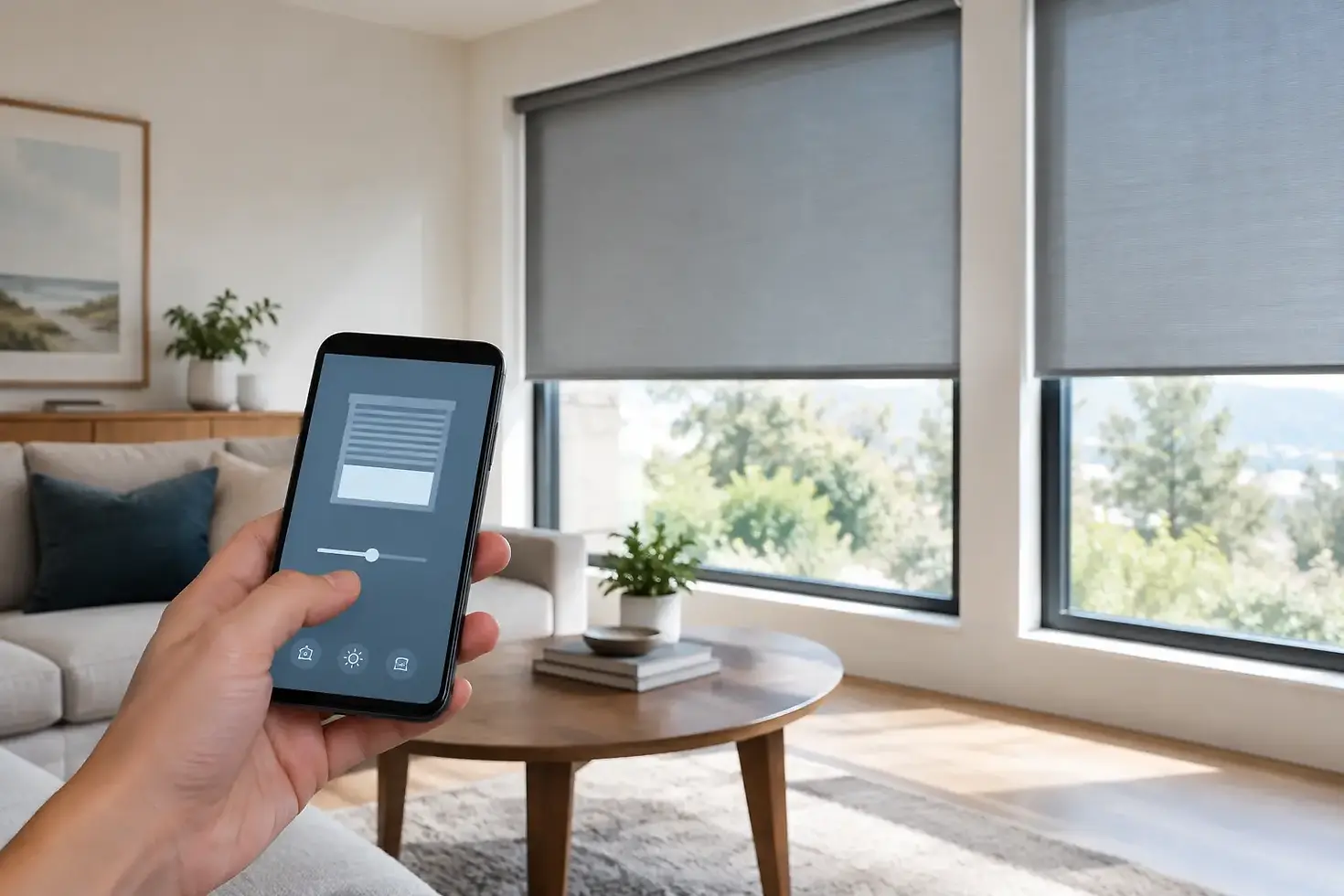
Smart blinds are window coverings operated by a motor rather than a manual chain, cord or wand. They can be controlled with a remote, wall switch, mobile app or, in some systems, voice control and home automation routines.
That means you can lower roller blinds from the sofa, schedule bedroom blinds to open in the morning, or close selected blinds when the sun reaches a particular side of the house. Depending on the system, blinds can also be grouped. One command can operate every blind in an open-plan living area, while another controls only the bedrooms.
Motorised blinds and smart blinds are often used to mean the same thing, but there is a small difference. A motorised blind may work from a remote only. A smart blind generally has app-based control, scheduling or the ability to connect with compatible home-automation systems. If you only want easy remote operation, a simpler motorised option may suit you well and cost less.
Where smart blinds make the most sense
Smart blinds are especially worthwhile where manual operation is inconvenient. This may be a double-height window, a stairwell, a large bank of sliders or windows behind furniture. They also suit homes where the same blinds are adjusted several times a day to manage sun and privacy.
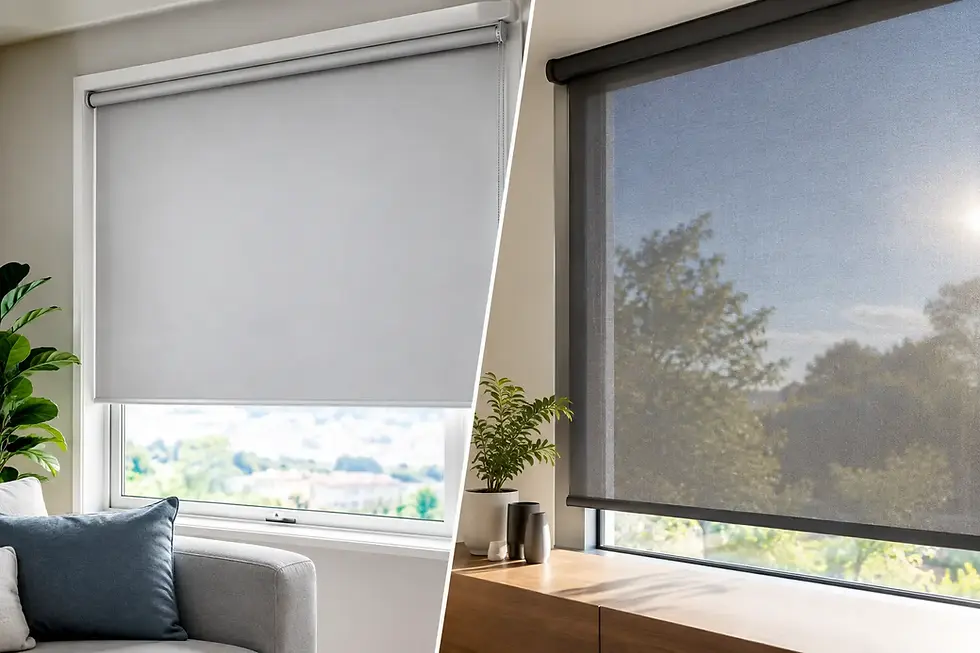
In living spaces, a sunscreen roller blind can soften glare while preserving an outward view during daylight hours. A blockout blind, often paired as a dual-blind system, gives greater privacy and light control at night. Automating either option makes it easier to use the blind as intended rather than leaving it in one position for days.
Bedrooms are another popular choice. A timed opening can bring natural light into the room in the morning, while a scheduled close can help with privacy before dark. For shift workers, young children or anyone sensitive to early light, blockout fabrics remain the key consideration. Automation adds convenience, but it cannot make a light-filtering fabric perform like a true blockout blind.
Smart operation can also be a helpful accessibility feature. Where reaching a chain is difficult, a remote or wall control can make a window covering much easier to use. In homes with children, removing accessible cords can also create a tidier, safer finish.
Choosing the right blind before choosing the motor
It is tempting to start with the app or remote, but the window covering should be selected for the room first. A well-chosen manual blind will always perform better than a poorly chosen automated one.
For heat, consider the direction the window faces, the amount of glass and whether the room is used during the hottest or coldest parts of the day. Cellular blinds can be a strong option where insulation is a priority, as their honeycomb structure helps trap a layer of air. Roller blinds offer a clean, compact look and a broad range of sunscreen, light-filtering and blockout fabrics. Venetian blinds give flexible control of light direction, while shutters can offer a more architectural, durable finish in suitable spaces.
The mounting position matters too. A blind fitted inside a recess has different clearance requirements from one fitted above the architrave. On bay windows, corner windows and sliding doors, small measuring errors can affect how blinds align, stack or operate. This is where a professional measure is valuable: it accounts for handles, trims, recess depth, opening direction and the practical space needed for the motor and brackets.
Consider light control honestly
A common expectation is that one blind will provide daytime views, full darkness, insulation and complete privacy. Occasionally that is possible, but often it requires a combination. For example, sunscreen blinds are excellent for daytime glare control, yet they may allow silhouettes to be visible from outside at night when indoor lights are on. A second blockout blind or curtains may be the better answer for a bedroom or street-facing room.
Automation can make a dual-blind arrangement particularly useful. You might schedule the sunscreen blind for daytime and lower the blockout layer in the evening. The result is a room that works better across the full day, rather than a compromise chosen for one moment.
Power, controls and connectivity
Most smart blind decisions come down to how the motor is powered and how you want to control it. Battery motors are popular because they avoid visible wiring and can suit existing homes where running electrical cable is impractical. Batteries will need charging or replacement from time to time, and access should be considered if the blind is very high or hard to reach.
Hardwired motors are often worth considering in a new build, major renovation or commercial setting. They can provide a very tidy long-term solution, particularly where there are many blinds operating together. However, they need early planning with your electrician. Retrofitting power after plasterboard and paint are complete can add cost and disruption.
Solar charging is available for some applications and can reduce the need to recharge batteries, provided the panel receives enough light. It is not the right answer for every window, especially shaded locations or windows with limited daylight exposure.
Before committing to a connected system, check what it requires to work reliably in your home. Wi-Fi coverage, a hub or bridge, app compatibility and the number of blinds you intend to control can all influence the best option. Smart-home integration is useful when it genuinely simplifies your routine. If everyone in the house is happy with a wall switch or remote, there is no need to pay for functions you will not use.
The real cost is more than the motor
Smart blinds cost more than comparable manual blinds because of the motor, controls, power supply and sometimes additional installation work. Large blinds may require a more powerful motor, and the price can rise quickly when multiple windows are grouped or integrated into a broader automation system.
That does not mean motorisation is only for premium homes. It can be sensible to automate the windows that are hardest to access or most frequently adjusted, then choose manual blinds elsewhere. Many homeowners find this mixed approach gives them the convenience they want without stretching the budget across every room.
It also pays to think about serviceability. Ask how batteries are accessed, what warranty applies to the motor and controls, and whether the product can still be operated if the remote is misplaced or the internet is unavailable. A dependable system should not leave you stuck with blinds permanently up or down because of a minor technical issue.
Why professional measuring and fitting matters
A smart blind needs more than a correct width and drop. The installer must allow for the motor head, brackets, fabric roll, control side and any obstructions around the window. On paired blinds, the layers need to sit neatly and operate without fouling each other. On wide openings, correct tension and level fitting help the fabric roll evenly and reduce unnecessary strain on the motor.
This attention to detail is particularly important for large glazing, bay windows and older homes where no two openings are exactly alike. At Light & Shade Solutions, the focus is on looking at the room in person, discussing how you use it and matching the product to the practical demands of the space. Seeing fabric samples against your own wall colours and daylight is far more useful than choosing from a small online image.
A free in-home measure and quote also gives you the chance to test the questions that matter: Will the blind clear the window handle? Where will the charger connect? Is a remote enough, or would a wall switch suit the household better? Can the same fabric meet your privacy and heat-control needs?
A smarter way to plan your window coverings
Start with the rooms that cause the most daily frustration. It may be the glare on the television, a bedroom that gets light too early, windows that are difficult to reach or an open-plan area that heats up every afternoon. From there, choose the blind type and fabric for performance, then decide whether motorisation will make that solution easier to use.
The best smart blinds do not demand attention. They quietly help your home respond to the light, privacy and comfort you need at different times of day. A careful measure, the right fabric and controls that suit your routine will matter far more than having the most complicated system available.

Comments