

How to Choose Roller Blind Opacity at Home

A west-facing lounge can look beautiful at midday and feel impossible by 3 pm. The television catches reflections, timber floors fade over time, and the room becomes warmer than it needs to be. To choose roller blind opacity well, start with what actually happens at that window - not simply the colour or pattern you like in a sample book.
Opacity determines how much light a roller blind fabric allows through, how clearly you can see outside, and how much privacy it provides. It is one of the most important decisions in a made-to-measure blind, because the right answer can be different for every room in the same home.
What roller blind opacity really means
Roller blind fabrics are generally grouped into sunscreen, light-filtering and blockout options. These terms describe how the fabric manages daylight, visibility and privacy, but they are not interchangeable.
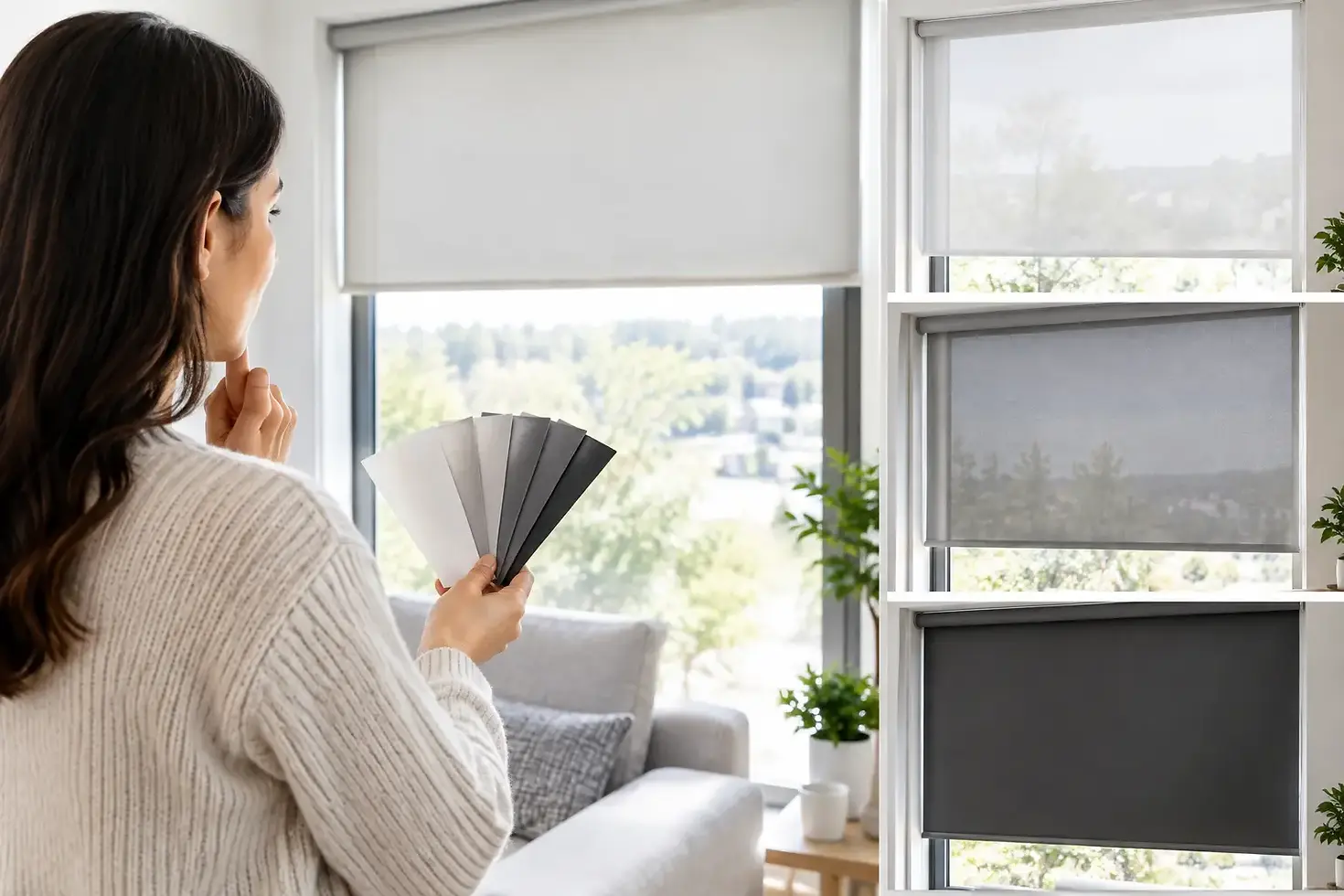
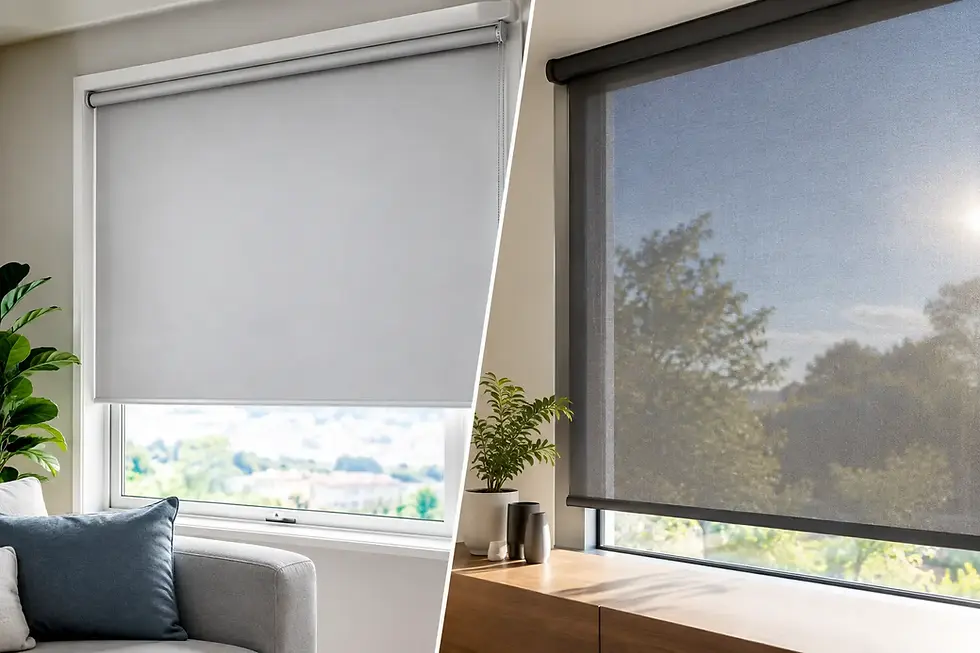
A sunscreen fabric has an open weave. It softens harsh sunlight while maintaining a view out during the day. You may see it described by an openness factor, such as 1%, 3%, 5% or 10%. The lower the percentage, the tighter the weave and the greater the control over glare and heat. A 1% fabric gives more daytime privacy and stronger sun protection than a 10% fabric, while a 10% fabric usually preserves a clearer outlook.
Light-filtering fabrics allow daylight to enter but obscure the view in and out. They create a soft, even glow and are a practical choice where you want privacy without making the room feel shut away. They do not usually provide the darkness needed for sleeping or media rooms.
Blockout fabric is opaque and designed to stop light passing through the material itself. It offers the highest level of privacy and is often the first choice for bedrooms. However, no standard roller blind makes a room completely dark unless the window treatment also deals with light gaps at the sides, top and bottom.
Choose roller blind opacity room by room
The best fabric is rarely the same throughout the house. Consider the room's purpose, when it is used, where the window faces and whether nearby homes overlook it.
Living rooms and open-plan spaces
For a lounge, dining area or open-plan kitchen, sunscreen roller blinds are often a good starting point. They reduce glare and UV exposure while keeping a connection to the garden, street or view. This is particularly useful on larger windows where blockout blinds could make the room feel visually heavy during the day.
For rooms that face the afternoon sun, a tighter sunscreen weave can make a noticeable difference to comfort. It will not replace insulation or air conditioning, but it can reduce the intensity of direct sun before it heats furnishings and glass.
If privacy is a concern after dark, remember that sunscreen blinds work best in daylight. Once interior lights are on and it is dark outside, people outside may be able to see in. A dual roller blind arrangement is often the sensible answer: sunscreen for daytime use and a blockout blind behind it for night-time privacy.
Bedrooms
Bedrooms need an honest assessment of sleep habits. If early morning light wakes you, or shift work means sleeping during the day, blockout roller blinds are usually worth considering. They provide privacy and reduce light through the fabric, helping create a calmer sleep environment.
The trade-off is that blockout blinds remove the daytime view when lowered. A dual roller system gives more flexibility, allowing sunscreen fabric during the day and blockout when it is time to sleep. This approach is especially useful in street-facing bedrooms or homes close to neighbours.
For the darkest result, look beyond the fabric. Light can enter around the edges of a roller blind, particularly where the recess is uneven or the blind needs to sit outside the frame. A careful measure and the right fitting position matter as much as choosing a blockout fabric.
Bathrooms and dressing areas
Privacy is usually the priority in bathrooms, but natural light still makes the room more pleasant to use. Light-filtering roller blinds can work well where the window is not directly overlooked, as they soften the light and prevent clear views through the fabric.
For a bathroom window facing a neighbouring home, blockout may be the better choice. Select a fabric suitable for damp conditions and make sure the blind is fitted where it will not interfere with opening windows, taps or splash zones. In a dressing room, the answer may depend on whether the space is used in the morning, at night or both.
Home offices and media rooms
Screens change the decision. A computer monitor opposite a bright window can be hard to use even when the room does not feel especially sunny. Sunscreen fabric is often the most practical option for a home office because it cuts glare without turning the room into a dark box.
A lower openness fabric is helpful for windows that receive direct sun, while a more open weave may suit a shaded office with a pleasant view. For a media room, blockout is generally more effective. If the room serves both purposes, dual blinds allow you to work with daylight and darken the space for a film when needed.
Daytime privacy is not night-time privacy
This is the point that catches many homeowners out. During the day, a sunscreen blind can make it difficult for people outside to see into a room because exterior light is stronger than interior light. At night, the balance reverses. With lights on inside, the room can become visible from outside.
Light-filtering fabric improves privacy because it obscures shapes and detail, but it may still show silhouettes close to the window. Blockout gives the strongest privacy through the fabric. If you want daytime views and dependable evening privacy, two blinds on the one window are often better value than choosing one fabric that only solves half the problem.
Do not judge opacity from a small sample alone
Fabric samples are essential, but they need to be viewed in the actual room. A charcoal sunscreen fabric can appear much more open against a bright north-facing window than it does under showroom lighting. A pale blockout fabric may look soft and decorative, yet still provide excellent privacy once fitted.
Hold samples against the glass at different times of day. Look through them from inside, then step outside and look back in. Consider the view, nearby windows, street lighting and the direction of the sun. Also compare the fabric with your wall colour, flooring and joinery. Opacity changes the feel of a room, while colour changes how noticeable the blind is when it is down.
This is where an in-home consultation is useful. Light & Shade Solutions can bring fabric options to your home so you can see how each opacity performs at the window it is intended for, rather than making a decision under artificial lighting.
Think about fit, not just fabric
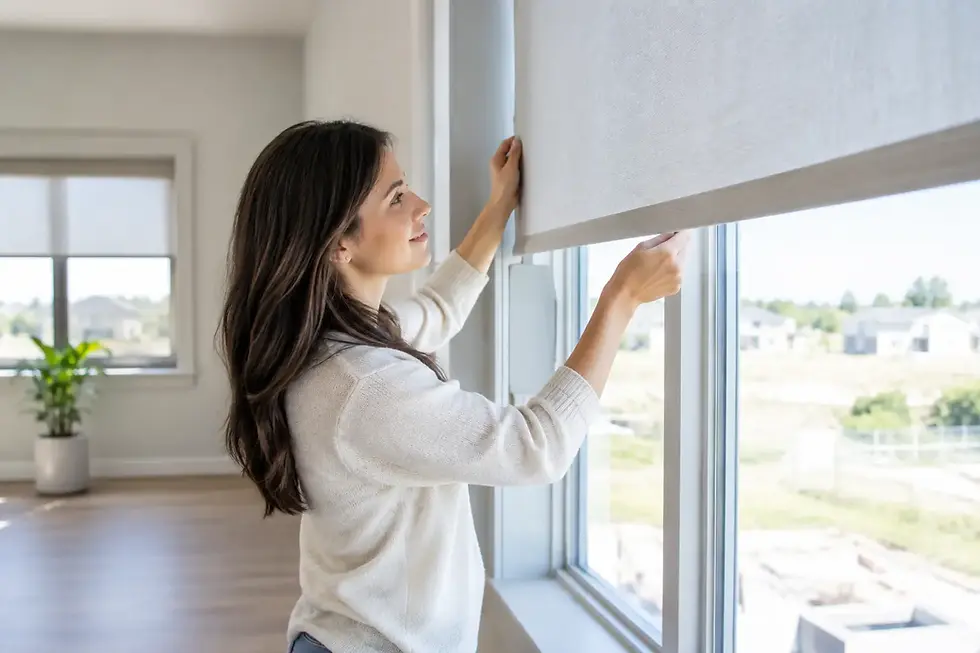
The fabric rating is only one part of light control. A roller blind installed inside a window recess will usually have small gaps at the sides to allow the mechanism to operate. An outside-mounted blind can cover more of the opening and reduce side light, although it may change the look of the window frame.
Wide windows, bay windows and doors often need extra planning. A single blind may be ideal in some spaces, while separate blinds can give better control on others. Split blinds can also allow one section to stay down for glare protection while another remains open for access or a view.
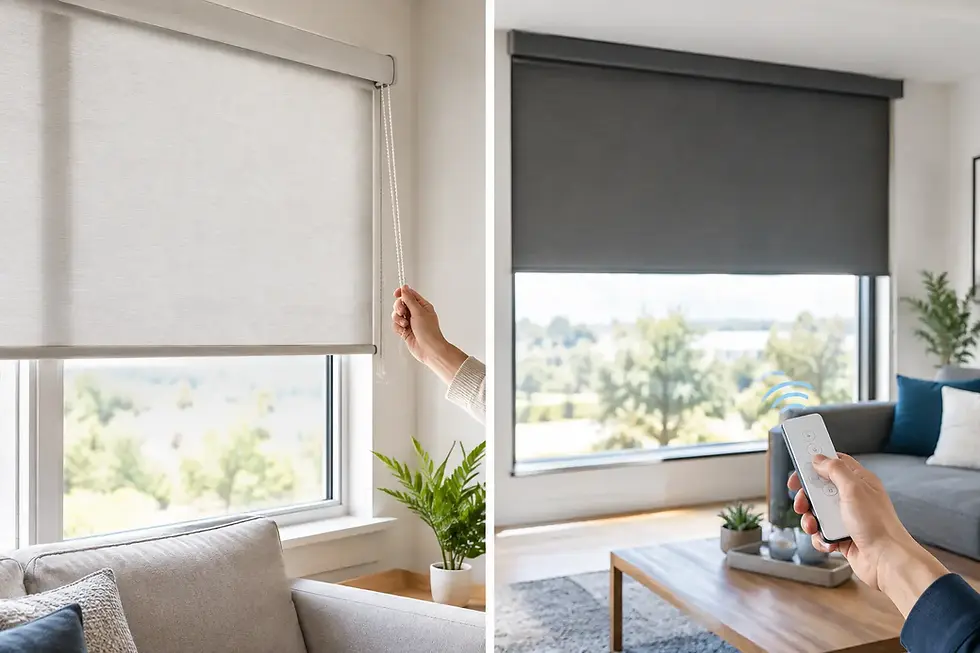
Ask how the blind will roll, where the control will sit and whether handles, latches or window openings will affect the fit. These practical details are what turn a good fabric choice into a blind that is easy to live with.
A simple way to make the decision
Start by ranking the window's main job: view, glare control, privacy, sleep or insulation. Then identify the second job, because that is often where a single blind reaches its limit. A living room may need a view first and privacy second. A bedroom may need darkness first and daylight second.
If one fabric cannot do both well, do not force the compromise. A dual roller blind is often the more satisfying long-term solution, especially on exposed, overlooked or sun-heavy windows.
The right opacity should make the room easier to use at every hour, not just look good on installation day. Seeing the fabrics in your own light, with a precise measure and practical advice on fitting, gives you the confidence to choose a roller blind that suits the way your home really works.
Comments