


New Build Window Furnishings Planned Properly

The plaster is finished, the floors are down and moving day is close. It is tempting to leave window coverings until last, but new build window furnishings are much easier to get right when they are considered alongside lighting, paint colours and joinery. The right choice makes a new home feel private, comfortable and complete from the first night, rather than like a house still waiting for its finishing touches.
For most homeowners, the challenge is not finding a blind or shutter they like. It is working out what will suit each room, how it will sit around window frames and handles, and when measuring should happen. A little planning avoids rushed decisions, awkward gaps and fittings that compete with the features you paid to include.
Why new build window furnishings need early planning
New homes often have large glazing areas, sliding doors, stacker doors, raked ceilings, narrow reveals and carefully selected window joinery. These features look excellent, but they can make a standard, one-size-fits-all solution a poor fit. Furnishings need to work with the window rather than simply cover it.
Early planning also lets you consider how each room will be used. A street-facing lounge may need daytime privacy without losing natural light. Bedrooms need reliable blockout for sleep, particularly where outdoor lighting or early morning sun is an issue. A west-facing living area can become uncomfortably warm in the afternoon unless the fabric and configuration are chosen with solar control in mind.
The other practical reason is timing. Measuring should generally take place once windows are installed and surrounding linings are complete, but before move-in if possible. This gives the installer accurate finished dimensions and allows enough time for made-to-measure products to be manufactured and fitted. Ordering from plans alone can be useful for early budgeting, but final production measurements should be taken from the completed openings.
Start with the window, then choose the furnishing
The best new build window furnishings are selected room by room. It is rarely necessary, or desirable, to use the same product throughout the entire house. A consistent colour palette can tie the look together, while each space gets the level of privacy, insulation and light control it needs.
Bedrooms need control, not just coverage
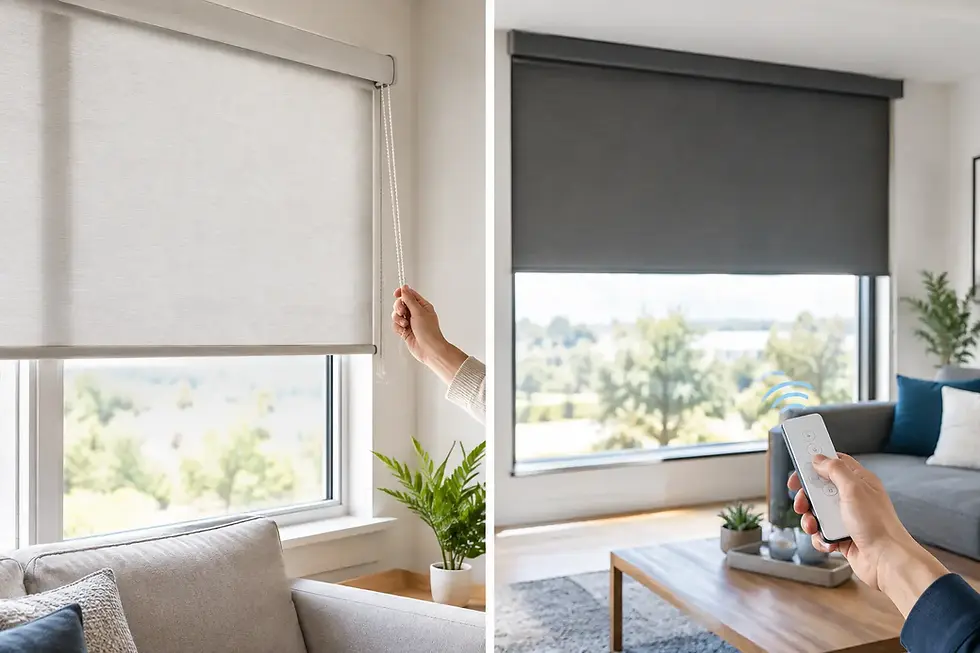
For bedrooms, the main question is how dark you want the room to be. Blockout roller blinds are a clean, practical option and suit many modern window styles. They sit neatly within or above the opening and are easy to operate every day. Small light gaps at the sides are normal with most roller blind installations, so homeowners seeking the darkest possible result should discuss the mounting position, side channels or a layered treatment early.
Hinged interior shutters bring a more architectural finish to bedrooms and allow flexible control through adjustable louvres. They can be particularly effective for street-facing rooms where privacy is needed without keeping the room shut away from daylight. The trade-off is that shutters need enough clearance to open properly and must be configured around handles, flyscreens and inward-opening windows.
Living areas benefit from flexible light
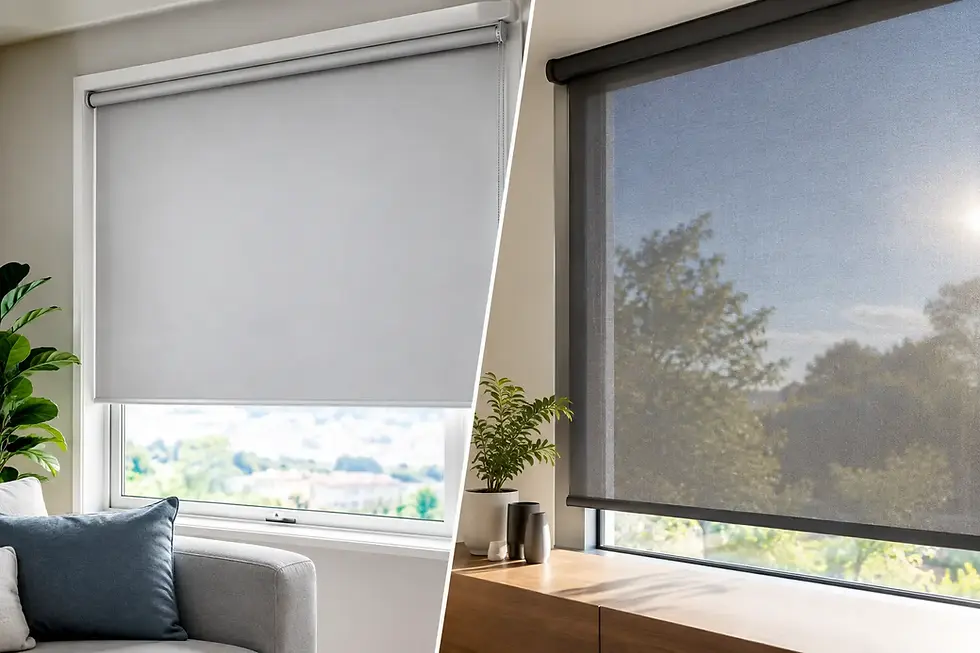
Living rooms usually need more than one setting. Bright sunlight can be welcome in winter, yet glare on a television or harsh afternoon heat is less enjoyable. Light-filtering roller blinds soften daylight and reduce glare while maintaining an open feel. A dual blind system can combine a sunscreen or light-filtering fabric for the day with a blockout blind for evenings and privacy.
Venetian blinds offer another level of adjustment. By tilting the slats, you can redirect light and retain airflow without fully raising the blind. They suit spaces where fine control matters, although they have a more detailed appearance than a simple roller blind and need regular dusting to keep them looking their best.
Kitchens and bathrooms need practical materials
In wet or high-use spaces, material selection matters as much as appearance. Window furnishings near sinks, cooktops and showers should be easy to clean and suitable for changing moisture levels. Some products cope better with humidity than others, so it is worth discussing the room conditions rather than selecting purely by colour.
A compact roller blind is often a sensible choice where there is limited room around the window or where a clean, low-maintenance finish is the priority. For a bathroom that overlooks a neighbouring property, a light-filtering fabric can provide daytime privacy, while a blockout option is better where complete privacy is needed at night.
Think about warmth as well as appearance
Large windows are a defining feature of many new homes, but glass can still influence comfort on cold nights and hot afternoons. Window coverings are not a replacement for well-designed glazing and insulation, yet they can make a noticeable difference to how a room feels.
Cellular blinds are worth considering where thermal performance is a priority. Their honeycomb structure holds a layer of air, helping reduce heat transfer through the window. They are especially useful in bedrooms, south-facing rooms and areas where you want a softer finish without heavy curtains.
The installation position matters too. A covering fitted close to the glass and sized correctly will generally perform better than one with large exposed gaps. This is one reason a proper measure is valuable. The choice is not only about whether a blind fits within the opening, but whether it provides the coverage and operation the room requires.
Do not overlook doors, bays and awkward spaces
Sliding and stacker doors need a solution that allows clear access without creating a tangle of fabric or chains. Depending on the opening, separate roller blinds, linked blinds or a different configuration may be more practical. The key is to consider where people will stand to operate the doors, whether the blind can be lifted easily, and how the furnishing will look when fully open.
Bay windows present a different challenge. Angles, mullions and limited reveal space can make measuring unforgiving. A product that looks simple on a straight window may need separate sections and carefully considered overlaps in a bay. This is not a place for guesswork, particularly when windows are a focal point of the room.
High windows, stairwells and hard-to-reach areas also deserve attention during the build. Motorisation may be worthwhile where daily operation would otherwise be inconvenient. It adds cost, so it is not necessary for every window, but it can be a practical investment for tall glazing, bedrooms with multiple blinds or rooms where changing light conditions are frequent.
Match the finish to the rest of the home
Samples viewed in a showroom can look very different once they are placed beside your flooring, wall paint and window joinery. Natural light changes throughout the day, and the colour of the glass itself can affect how fabrics appear. Looking at samples in the actual room is one of the simplest ways to avoid a shade that feels too cool, too stark or unexpectedly dark after installation.
Neutral colours remain popular because they work with changing furniture and décor, but neutral does not have to mean plain white. Soft stone, warm grey, sand and muted textured fabrics can give a new home depth without taking attention away from the architecture. If the joinery is black, bronze or timber-look, decide whether you want furnishings that blend quietly or create a deliberate contrast.
For a more tailored result, keep the visual weight of each product in mind. Roller blinds tend to disappear when raised and suit clean-lined interiors. Shutters become a permanent design feature. Venetian blinds add texture and strong horizontal lines. There is no universally better option - it depends on the room, the budget and the look you want to live with.
Allow for professional measuring and fitting
A professionally fitted result begins with accurate measuring, but it also depends on the details that are easy to miss. These include the depth of the reveal, window handle projection, the location of light switches, flyscreens, architraves and whether the opening is square. New builds can still have slight variations from one window to the next, even where the plans show identical sizes.
An experienced consultant will also ask useful questions: Do you want the blind inside or outside the reveal? Will furniture sit in front of the window? Is privacy needed during the day, at night, or both? How often will the product be used? Those answers shape the configuration as much as the measurements do.
Light & Shade Solutions brings samples to your home for a no-obligation measure and quote across Greater Auckland, making it easier to see products against your own finishes before you commit. For customers further afield, guided online consultations can still provide clear advice before made-to-measure furnishings are supplied.
A new build gives you one chance to get the foundations right. Treat your window furnishings as part of the home’s design, not an afterthought, and each room will feel more comfortable, more private and properly finished from the day you move in.

Comments