

Roller Blinds Versus Sunscreen: Which Suits?

A west-facing lounge can be bright enough to wash out the television, yet still offer a lovely outlook you do not want to hide. That is where the choice of roller blinds versus sunscreen becomes more than a question of colour or style. The right fabric changes how a room feels through the day, how private it is after dark and how comfortably you can use it year-round.
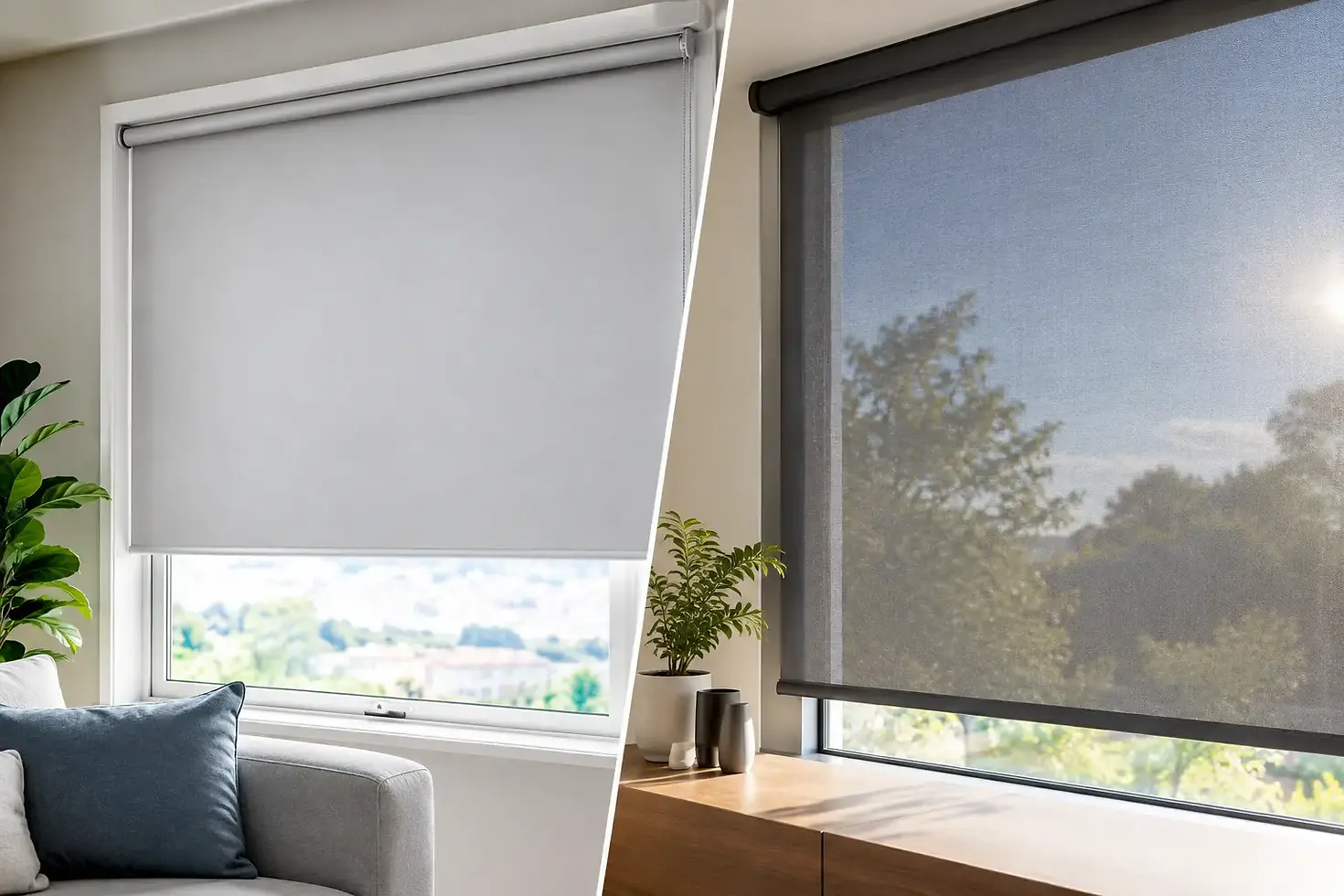
The first helpful point is that sunscreen blinds are technically a type of roller blind. The real comparison is usually between a blockout roller blind and a sunscreen roller blind. Both have a clean, streamlined appearance and can be made to suit the window precisely, but they perform very differently.
Roller blinds versus sunscreen blinds: the key difference
A standard roller blind can be made in several fabric types, including blockout, light-filtering and sunscreen. When people say “roller blind”, they often mean a blockout roller blind: a solid fabric that prevents light passing through the material. It is designed for privacy, darkness and stronger control over the room.
A sunscreen blind uses an open-weave fabric. It filters harsh sunlight and glare while allowing you to see through to the outdoors during daylight. From inside, it softens the view rather than closing it off. The degree of visibility depends on the fabric’s openness factor, colour and the strength of the light outside.
Neither is automatically better. A bedroom with morning sun has different needs from a living area overlooking a garden, and a street-facing study calls for a different level of privacy again.
When a blockout roller blind is the better choice
Blockout roller blinds are the practical choice where darkness and privacy matter most. Bedrooms, nurseries, media rooms and bathrooms are common examples. A well-fitted blockout blind helps reduce early light, limits glare and prevents silhouettes being visible from outside at night.
They are also useful in rooms where you want a more enclosed, restful feel. In a bedroom, this can support better sleep. In a television room, it makes daytime viewing more comfortable. The fabric also adds a layer at the window, which can assist with comfort around the glass, although no blind can fully replace good glazing and insulation.
There is a trade-off. With a blockout roller blind down, you lose the view and much of the natural daylight. If the blind is raised to enjoy the outlook, you lose privacy and sun control at the same time. For some windows that is perfectly acceptable. For others, it becomes a daily compromise.
Light can also travel around the edges of a roller blind. This is normal with a standard installation, particularly where the blind sits inside the window reveal. If you need the darkest possible room, the way the blind is mounted, the overlap beyond the glass and any side channels should be discussed during the measure and quote.
Best rooms for blockout fabrics
Blockout roller blinds generally suit bedrooms, children’s rooms, bathrooms, home cinemas and any window facing close neighbours or a busy street. They are also a sensible option for shift workers who need to sleep during the day.
Where sunscreen blinds work best
Sunscreen blinds are made for rooms you use during daylight hours. They reduce glare on screens, protect furnishings from harsh UV exposure and take the edge off strong sun without turning the room dark. This makes them particularly popular in lounges, dining rooms, kitchens and home offices.
The benefit is not simply that you can see out. It is that the room remains connected to the outside while becoming easier to live in. You can work at a desk near a window, enjoy the garden view and reduce the glare that makes a space uncomfortable in the afternoon.
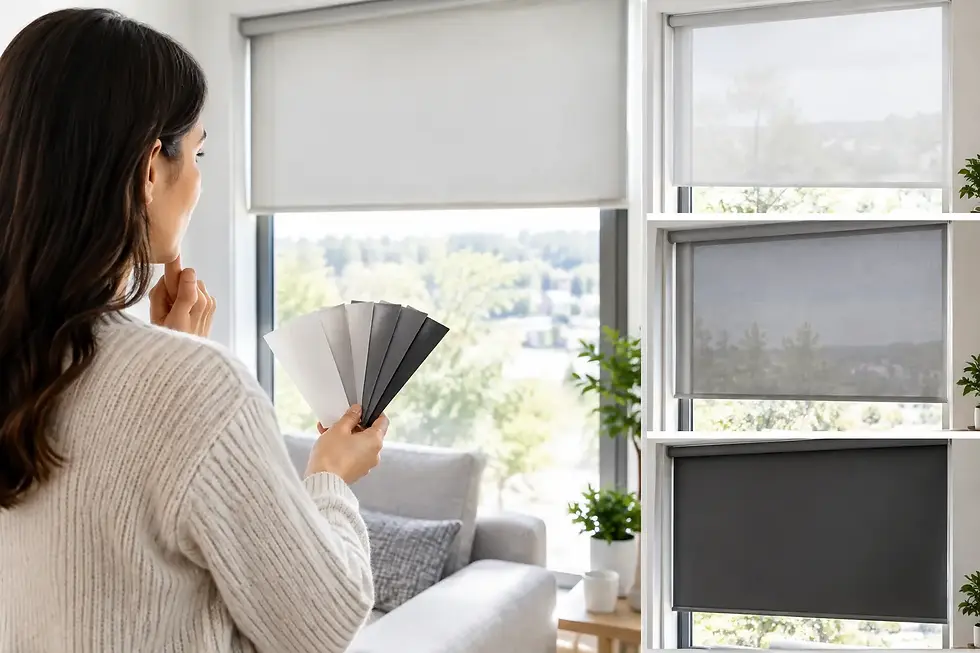
Fabric colour matters here. Darker sunscreen fabrics often provide clearer outward visibility because they reduce reflected light on the inside surface. Lighter fabrics can create a softer, brighter interior look, but may offer a less defined view through the blind. Seeing samples against your own windows is worthwhile, especially in rooms with strong direct sun.
Sunscreen fabrics also come in different openness levels. A more open weave generally offers a clearer view and more daylight, while a tighter weave gives greater shade and privacy. The best choice depends on orientation, neighbouring homes and how you use the room.
The night-time privacy catch
Sunscreen blinds provide good daytime privacy when it is brighter outside than inside. At night, the situation reverses. If the lights are on indoors, people outside may be able to see through the fabric, particularly from close range.
For this reason, sunscreen blinds on their own are not usually the best answer for bedrooms, bathrooms or exposed ground-floor windows. They can still suit these spaces when paired with curtains, shutters or a second blind, but it is important to plan for night-time privacy rather than assume the fabric will provide it.
The practical option: two blinds on one window
For many homes, the best answer is not blockout or sunscreen. It is both.
A dual roller blind system places a sunscreen blind and a blockout blind on the same bracket. During the day, the sunscreen blind manages glare while keeping the view. At night, the blockout blind provides privacy and darkness. It is a particularly useful arrangement for bedrooms with a view, living areas facing the afternoon sun and open-plan rooms that are used from morning through to evening.
This approach costs more than installing one blind, and it needs enough space around the window for the bracket configuration. However, it avoids asking one fabric to do two opposing jobs. You are not forced to choose between enjoying daylight and protecting privacy after dark.
Consider the window, not just the room
The same room may need different blind fabrics on different windows. A lounge could have sunscreen blinds across large doors facing the backyard, with blockout blinds on a side window that looks directly towards a neighbour. A bedroom may benefit from sunscreen on a high window that brings in afternoon glare, plus blockout protection at the main window.
Orientation is a useful starting point. West-facing glass often needs effective glare control in the late afternoon. East-facing bedrooms can receive strong early light. North-facing windows may need year-round light management, while south-facing rooms can be more concerned with privacy and retaining a comfortable feel without making the space unnecessarily dim.
Window shape and installation position matter as well. Recess-fitted blinds look neat and can work beautifully where the reveal is square and deep enough. Face-fitted blinds may offer better light coverage because the fabric extends beyond the glass. Bay windows, sliding doors and unusually shaped openings need careful measuring so that brackets, chains and fabric clearances all work as intended.
Choosing fabric, operation and finish
Once you have selected the right level of privacy and light control, the finishing decisions become easier. Neutral tones tend to sit quietly within a room and are flexible if you change furniture later. A darker sunscreen fabric can frame the view more clearly, while a lighter blockout fabric can keep a compact bedroom from feeling too heavy.
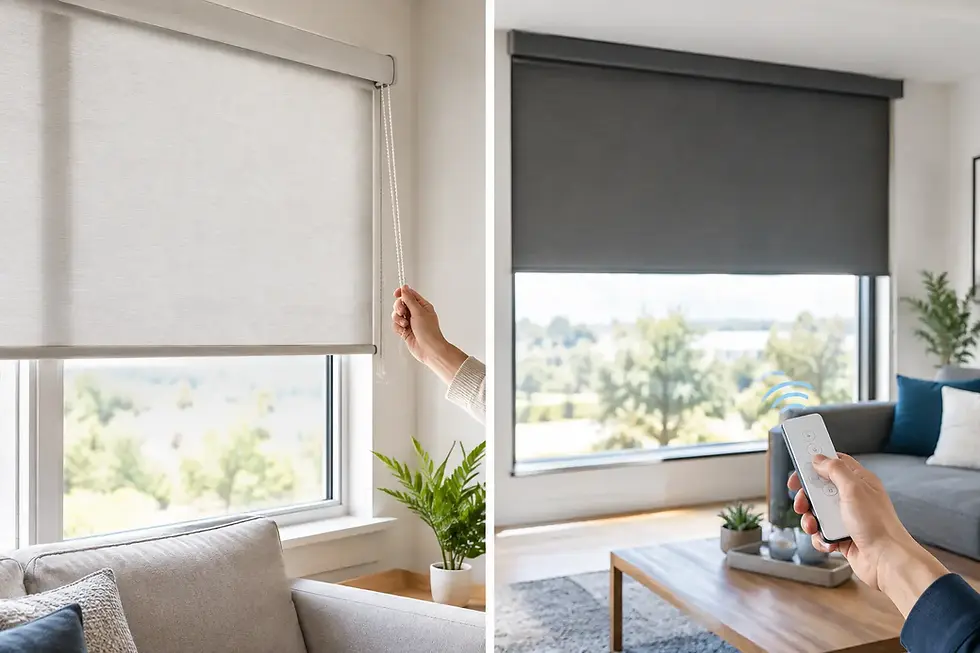
Think about operation too. Chain control remains a reliable, cost-effective option, while motorised blinds are convenient for large windows, hard-to-reach areas or homes where several blinds are operated at once. For children’s rooms, cords and chains should always be fitted with the appropriate safety tension device.
A sample that looks right in a showroom can look quite different beside your flooring, wall colour and window aspect. Viewing fabrics in the actual room helps you judge the colour, weave and outward visibility under your own light conditions.
A better decision starts with the questions you ask
Before choosing, stand at the window at the times you normally use the room. Ask whether glare is the main problem, whether you need to sleep there, whether neighbours can see in, and whether losing the view would frustrate you. Those answers usually point clearly towards sunscreen, blockout or a dual blind system.
At Light & Shade Solutions, the aim of an in-home measure is to resolve those practical details before anything is ordered - from fabric choice and mounting position to the way each blind will operate day to day. A window covering should not just look finished on installation day. It should make the room easier to enjoy every day after.
Comments