

Manual Versus Motorised Blinds for Your Home

A blind that is awkward to reach soon becomes a blind that stays in one position all day. That is where the choice between manual versus motorised blinds becomes more than a question of looks. The right option affects how easily you manage privacy, glare, warmth and daily living in each room.
Manual blinds remain a practical, reliable choice for many homes. Motorised blinds bring a level of convenience that can be especially worthwhile on large windows, tall glazing and hard-to-reach areas. Neither is automatically better. The best fit depends on the window, how you use the room, your budget and whether you are planning for the home you have now or the one you will need in years to come.
Manual versus motorised blinds: the main difference
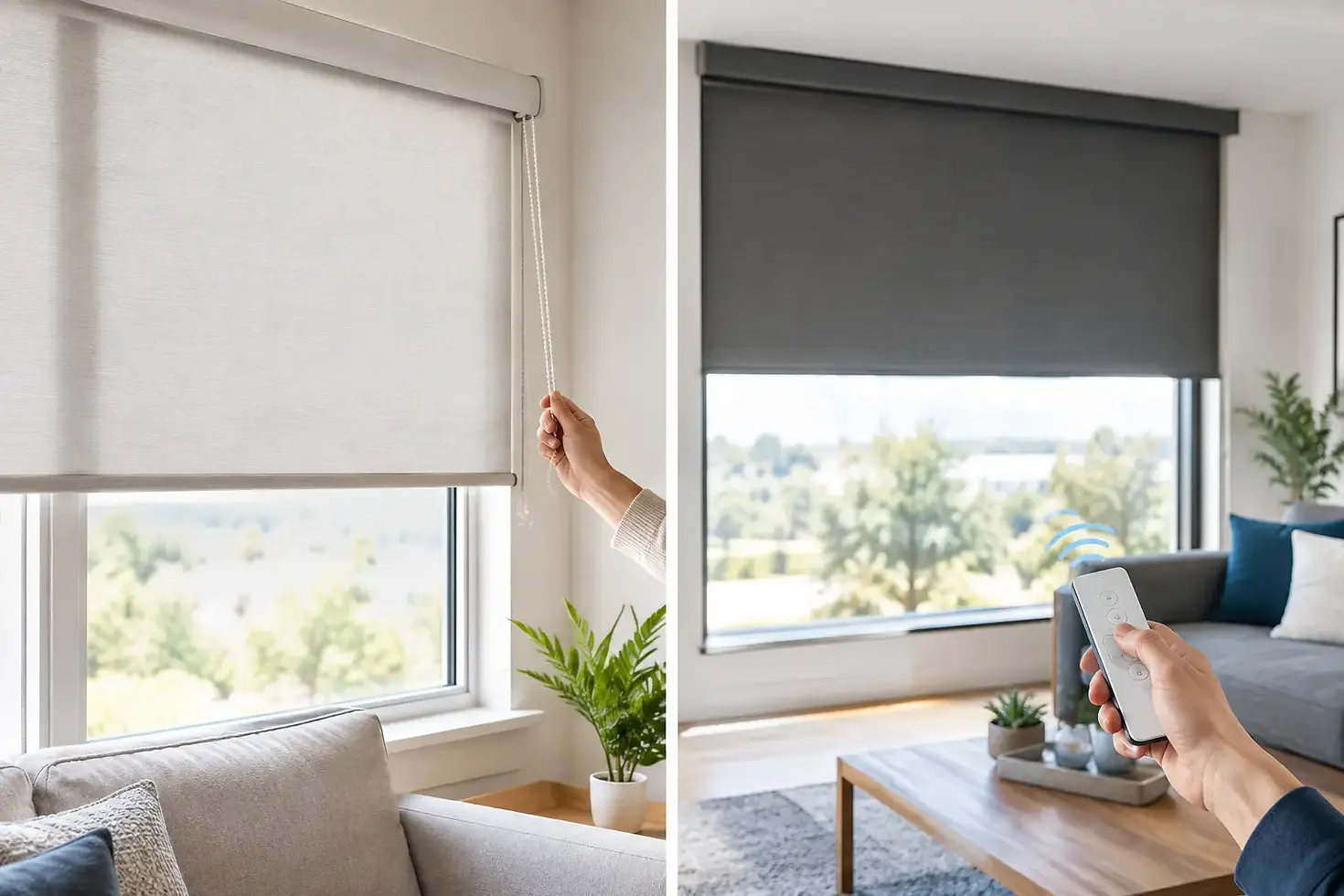
Manual blinds are operated by hand, usually with a chain, cord, wand or spring-assisted mechanism. Roller blinds, Venetian blinds and cellular blinds can all be made with manual controls. They are straightforward to use, have fewer components and are often the most economical way to cover several windows.
Motorised blinds use a compact motor within the blind tube or headrail. Depending on the system, they can be operated by remote control, wall switch, app or home automation. Some are rechargeable, while others are hardwired during a new build or renovation.
The practical difference is simple: manual blinds ask you to walk to the window and operate them individually; motorised blinds let you adjust one blind, a group of blinds or the whole house with far less effort. But the value of that convenience varies greatly from room to room.
When manual blinds make the most sense
For standard bedroom, living-room and study windows that are easy to reach, manual operation is often all you need. A quality made-to-measure roller blind with a smooth chain mechanism is quick to use and gives excellent everyday light control. In a home with multiple windows, selecting manual blinds in lower-priority spaces can also keep the overall project within budget.
Manual options suit homeowners who prefer simple controls and do not need scheduled operation. There is no motor to charge, no remote to misplace and no need to consider power access. This can be particularly appealing in established homes where running electrical wiring would involve extra work.
They are also a sensible choice where blinds are only adjusted occasionally. A guest bedroom, small laundry or a window that is generally left closed for privacy may not justify the additional cost of motorisation.
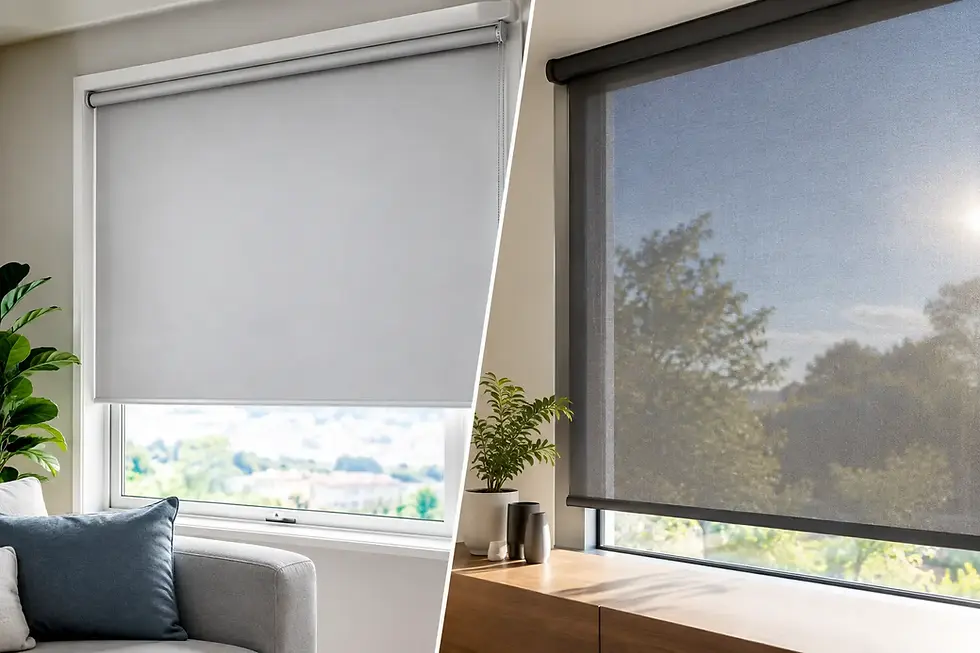
That said, manual does not mean basic. Fabric choice, blind configuration and careful fitting still make a major difference. A sunscreen roller blind can soften glare while preserving a view, while a blockout blind can support darkness and privacy. In colder rooms, cellular blinds can help improve insulation by trapping air within their honeycomb structure.
Where motorised blinds earn their keep
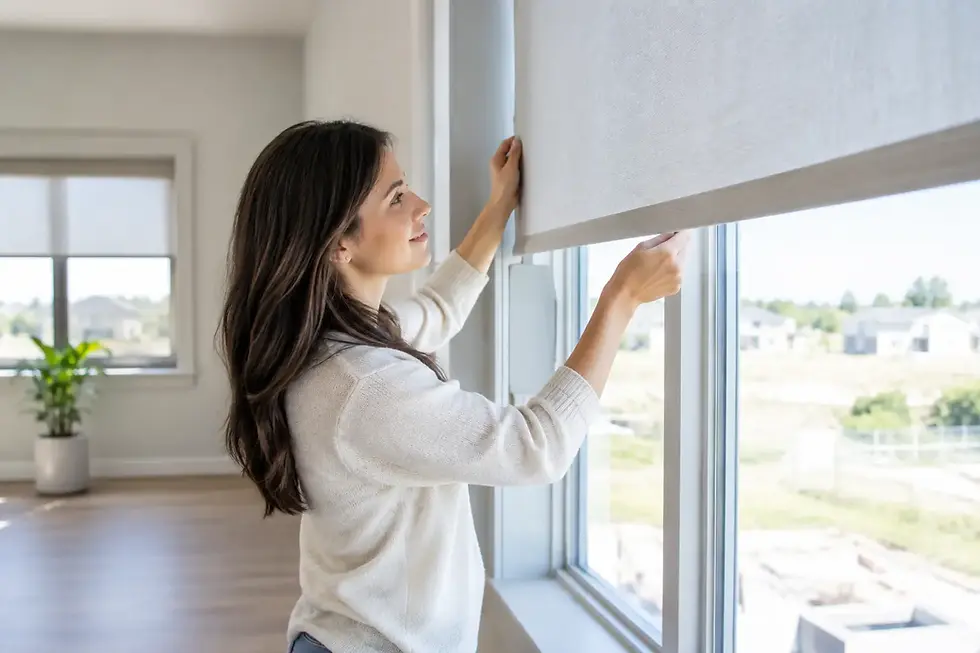
Motorisation is most useful when operating a blind manually would be inconvenient. High windows in stairwells, large sliding-door openings, bay windows and glazing behind furniture are common examples. If you need a stool to reach the control, the blind is unlikely to be used as often as it should be.
Motorised blinds are also well suited to rooms that change throughout the day. In a west-facing living area, blinds can be lowered before afternoon sun creates glare and overheats the room. In bedrooms, blockout blinds can be scheduled to rise in the morning without disturbing a sleeping child. For homes with extensive glazing, grouping blinds on one remote can make the evening privacy routine much easier.
There is a safety benefit, too. Cordless motorised operation removes hanging chains and cords, which may be preferable in nurseries, children’s bedrooms and play areas. Manual blinds can also be supplied with appropriate child-safety devices, but motorisation keeps the window area cleaner and simpler.
For people with reduced mobility, arthritis or shoulder injuries, motorised blinds can be a genuinely practical improvement rather than a luxury. The same applies to older homeowners planning to remain in their home long term. A small decision during a renovation can make daily routines easier later on.
Cost, power and maintenance considerations
The upfront cost is the clearest trade-off. Motorised systems cost more than the equivalent manual blind because of the motor, controls and, in some cases, electrical work. If every blind in a large home is motorised, the difference can be considerable.
This does not mean motorisation needs to be an all-or-nothing choice. Many homeowners motorise the windows that are difficult to access or used frequently, then choose manual blinds elsewhere. A large family room, a bedroom with tall windows and a media room may benefit from motorisation, while smaller bedrooms and utility spaces remain manual.
Power should be considered early. Rechargeable motors are a tidy option where wiring is not available, although they will need charging from time to time. Hardwired motors avoid that task and can be an excellent choice for new builds, but they need to be planned before linings and finishes are completed. Battery-powered options may suit certain applications, though it is worth discussing expected battery life and access for replacement.
Both manual and motorised blinds need good-quality components and correct installation. A motor will not compensate for a blind that has been poorly measured, fitted out of square or specified in the wrong fabric. Likewise, a manual chain mechanism should run smoothly without excessive tension or rubbing against the window frame.
Light control and privacy are still the first priorities
It is easy to focus on the control method and overlook the more important question: what does the blind need to do? A motorised sunscreen blind may be convenient, but it will not provide bedroom darkness. A manual blockout blind may deliver excellent privacy, but gaps at the sides can still allow light into the room.
Start with the window’s purpose. Bedrooms usually need privacy and stronger light control. Living areas may need glare reduction while retaining natural light. Street-facing rooms often benefit from a combination of daytime privacy and evening coverage. Kitchens and bathrooms require materials that suit humidity, cleaning and regular use.
For some windows, two layers are the best answer. A sunscreen roller blind can be used during the day, with a blockout blind lowered at night. Motorising one or both layers can make this arrangement easier to use, but the configuration should be designed around the room rather than chosen simply for the technology.
Choosing the right option for each room
A good blind plan rarely uses one solution everywhere. Consider how accessible the window is, how often the blind will move, whether children use the space and what level of insulation, privacy or darkness is required.
Manual blinds are often ideal for accessible windows where value and simplicity matter. Motorised blinds are particularly worthwhile for tall, wide or frequently adjusted windows, and for rooms where a scheduled routine would improve comfort. For a renovation or new build, planning motorisation early gives you more control over wiring, switch positions and the finished look.
Seeing fabrics and operating systems in your own room can prevent expensive guesswork. Light levels, window reveals, furniture placement and the direction a room faces all influence the right choice. At Light & Shade Solutions, this is why a proper measure and discussion matters as much as selecting a fabric from a sample.
The most satisfying blind is not necessarily the one with the most features. It is the one you can use easily every day, fitted precisely to the window and chosen to make the room feel more comfortable from morning through to night.

Comments