


Reducing Glare With Blinds That Work at Home

A bright room can be a pleasure until the afternoon sun hits the television, turns a computer screen into a mirror, or makes the dining table too harsh to use comfortably. Reducing glare with blinds is not simply about making a room darker. It is about softening direct light while keeping the room useful, private and pleasant to live in.
The right answer depends on where the window faces, what happens in the room, the size and shape of the glass, and how much view you want to retain. A blind that works beautifully in a north-facing lounge may be frustrating in a bedroom or home office. Getting those details right before ordering makes a noticeable difference every day.
Why glare needs more than a basic blind
Glare is caused by intense light reflecting off smooth surfaces. Screens, polished benchtops, tiled floors, artwork and even light-coloured furniture can all bounce sunlight around a room. Direct sun is usually the main culprit, but a bright sky can also cause discomfort, particularly in rooms with large expanses of glazing.
Closing any window covering will reduce some light, but the most useful solution gives you control. You may want filtered daylight through the middle of the day, full coverage when the sun drops lower, and clear views at other times. That is why fabric openness, blind direction, fit and operating method matter just as much as the colour you choose.
In Australia and New Zealand, north and west-facing windows often need the closest attention. North-facing glazing receives strong sun for much of the day, while west-facing rooms can become difficult to use late in the afternoon. East-facing bedrooms and kitchens can have the same issue in the morning. A quick observation of when the glare occurs is often more valuable than choosing from a sample book alone.
Reducing glare with blinds room by room
Start with how the space is used, rather than asking which blind is generally best. A living room, bedroom and work area need different levels of light control.
Living rooms and media spaces
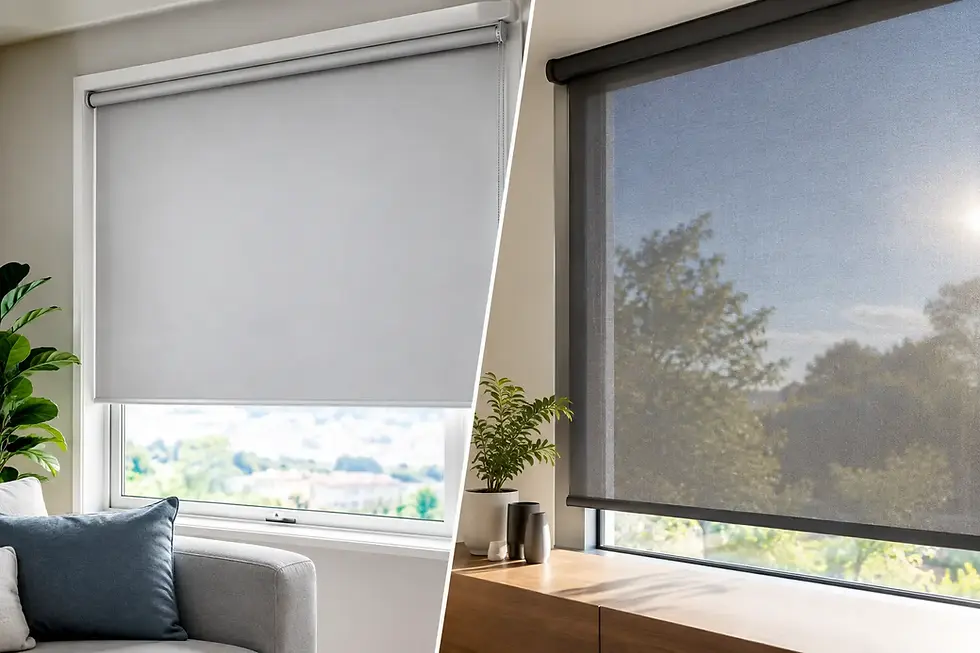
For a lounge with a television, roller blinds are often a practical option. A sunscreen fabric can soften daylight and reduce reflections while preserving an outside view. The openness factor of the fabric is key: a more open weave lets in more light and offers a clearer view, while a tighter weave provides stronger glare reduction and greater daytime privacy.
If the room is used for films, sport or gaming, consider a blockout roller blind instead, or pair a sunscreen blind with a separate blockout layer. This gives the room flexibility. During the day, the sunscreen layer takes the edge off the sun. At night, or when the screen needs maximum contrast, blockout coverage can be used.
Home offices
A desk facing a window can create both screen glare and eye strain. Before choosing a blind, consider whether the desk can be repositioned so the window sits to the side of the monitor rather than directly in front of or behind it. Blinds then become the fine-tuning tool, not the only solution.
Roller blinds in a quality sunscreen fabric are popular for offices because they diffuse daylight without making the room feel closed in. For low western sun, however, make sure the blind can be lowered fully and fitted close to the window. Light escaping through wide side gaps can still land directly on a screen at the most inconvenient time of day.
Bedrooms
In bedrooms, glare control and sleep quality usually go together. A blockout roller blind is a sensible choice where early sun, street lighting or neighbouring homes are an issue. Be realistic about the term blockout: a standard blind fabric blocks light through the face of the blind, but some light can still enter around the sides, above the headrail and below the bottom rail.
For the darkest result, accurate measuring and a well-considered installation are essential. Depending on the window, fitting the blind outside the recess with sufficient overlap can reduce light leakage more effectively than a recess fit. This is particularly worthwhile for children’s rooms, shift workers and anyone who prefers a darker sleeping space.
Kitchens and dining areas
Kitchens need glare reduction without making a busy work area feel gloomy. Venetian blinds are useful where adjustable light control is the priority. Tilt the slats to direct sunlight towards the ceiling or floor, reducing harsh glare while maintaining airflow and a degree of visibility.
Material matters near sinks and cooking zones. Aluminium or moisture-resistant options are generally easier to wipe down than fabric coverings. Keep blinds clear of hobs and avoid configurations that interfere with opening windows or access to splashbacks.
Choose the blind style that gives you control
There is no single blind that suits every window. The best choice is the one that handles the particular type of light you receive and suits the way you want to use the room.
Roller blinds offer a clean, unobtrusive finish and work well across large windows, sliding doors and contemporary interiors. They are available in sunscreen, translucent and blockout fabrics. Sunscreen roller blinds are particularly effective when glare is the issue but you still value daylight and an outdoor outlook. Translucent fabrics soften light and provide privacy, although they do not give the outward view of a sunscreen fabric or the darkness of a blockout fabric.
Venetian blinds give the most immediate adjustment. Their tilting slats let you redirect sunlight without raising the blind completely, which can be helpful when the sun sits low. The trade-off is that they have more individual surfaces to dust and clean, and may not achieve the same room-darkening performance as a well-fitted blockout roller blind.
Cellular blinds diffuse light gently and can also assist with insulation. Their honeycomb structure traps air, which can be welcome in rooms that become hot in summer or lose warmth in winter. They suit homeowners looking for a softer appearance and improved comfort, though fabric choice still determines how much glare and light are filtered.
Plantation-style interior shutters provide durable, adjustable light control with a more architectural look. Angling the louvres can block direct sun while allowing air and softer ambient light into the room. They can be an excellent option for bedrooms, street-facing rooms and unusual windows, but the frame depth and opening requirements need to be planned carefully.
Fit and fabric are where performance is won or lost
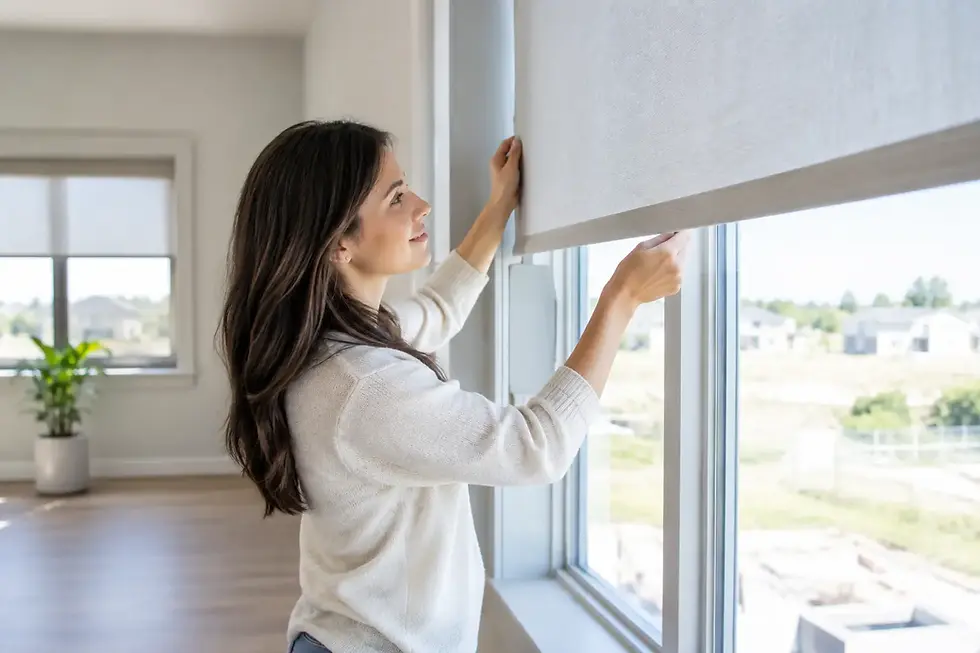
Even a premium blind will disappoint if it is not sized and fitted for the window. A recess fit can look neat and streamlined, but it naturally leaves small clearances for the blind to operate. For general glare reduction, this is often perfectly suitable. For a bedroom or media room where light control is the priority, an outside-recess fit with generous overlap may be the better decision.
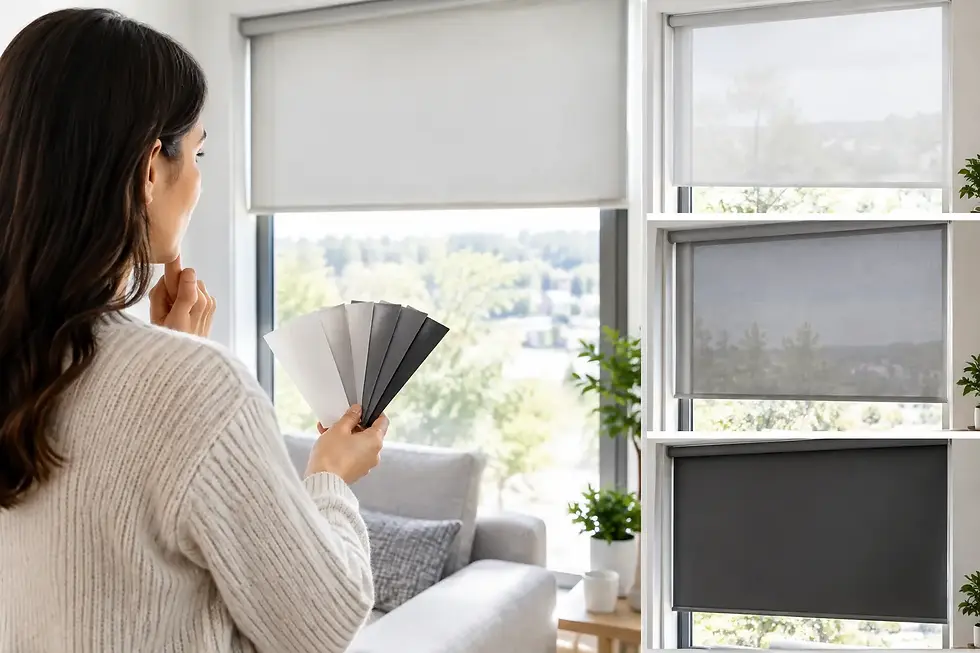
Colour also affects comfort. Dark sunscreen fabrics can reduce glare effectively and often provide better outward visibility during daylight, as the eye looks through the darker surface towards the brighter view. Lighter fabrics can make a room feel more open but may reflect more light inside. The best choice depends on the room’s finishes, the strength of the sun and whether the view is a major feature.
Do not rely on a small sample alone. Hold fabric against the actual glass at the time of day glare is most noticeable. Look through it, stand where you sit or work, and see how it changes the light on screens and surfaces. A mobile showroom or in-home consultation makes this decision far easier because colour, texture and openness look different in your own room than they do under showroom lighting.
Practical details worth checking before you order
Think through daily operation. A chain-operated roller blind may suit an easy-to-reach window, while motorisation can be worthwhile for high windows, wide doorways or rooms where the sun changes quickly during the day. Motorised blinds also make it simpler to lower several blinds together before glare becomes a problem.
For sliding doors, ensure the blind arrangement still allows clear access. For bay windows, each section may need its own carefully measured blind so the coverings operate without clashing. For large commercial or open-plan spaces, consider whether the glare affects multiple workstations at once and whether separate zones of control are needed.
Child safety should also be part of the decision. Any cords or chains need appropriate safety devices and placement. A professional measure and installation helps identify these practical issues before they become an inconvenience.
A well-chosen blind should let you enjoy natural light rather than spend every sunny afternoon avoiding it. Take note of when and where glare occurs, then choose the fabric, configuration and fit that solves that specific problem. A careful measure and honest advice at the window will usually save far more frustration than choosing a blind based on appearance alone.
Comments