

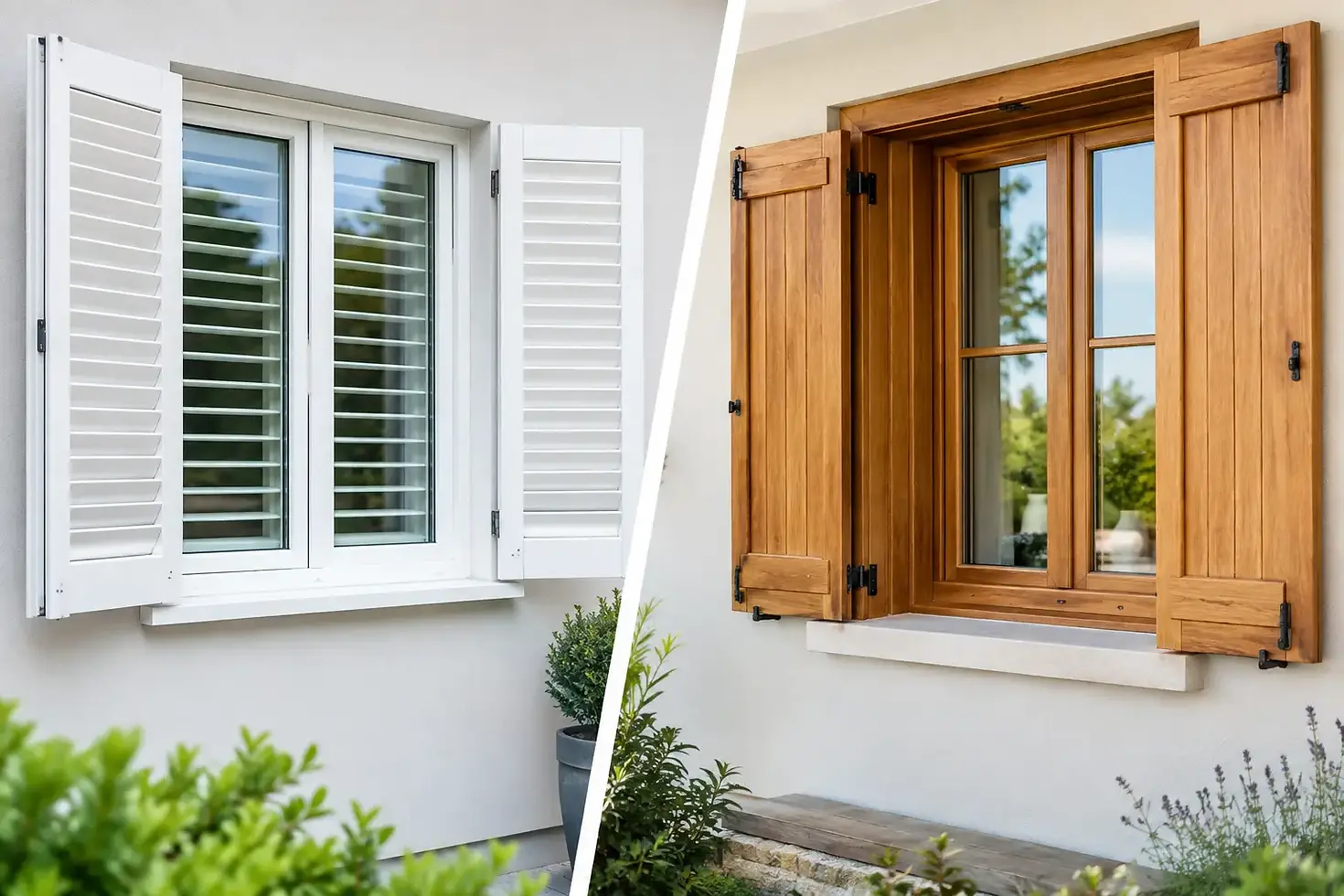
PVC Shutters Versus Timber: Which Suits Your Home?

A white shutter can look equally at home in a coastal bathroom, a busy family kitchen or a sun-filled living room. What changes is how well it copes after years of steam, strong sun, cleaning and daily use. That is where the PVC shutters versus timber decision becomes more than a question of looks.
Both materials can create a tidy, tailored finish with excellent privacy and adjustable light control. Neither is automatically better for every house. The right choice comes down to the room, the window, the finish you want and how much maintenance you are comfortable with over time.
PVC shutters versus timber: the practical difference
PVC shutters are manufactured from a durable, moisture-resistant synthetic material. They are typically finished in white or light neutral tones and are designed to keep their shape in damp, high-use rooms. Timber shutters are made from natural wood or engineered timber, bringing a warmer appearance and a broader choice of painted or stained finishes.
At the window, both work in much the same way. Hinged panels open for access, while adjustable louvres let you direct daylight, improve privacy and maintain airflow. The real differences appear in their reaction to moisture, heat, weight, finish and long-term care.
A material that performs beautifully in a dry bedroom may not be the best fit beside a shower. Likewise, a practical bathroom shutter might not deliver the richness a homeowner wants in a formal lounge with timber flooring and joinery.
Where PVC shutters make the most sense
PVC is usually the straightforward choice for areas exposed to humidity and splashes. Bathrooms, laundries, kitchens and pool-adjacent rooms are common examples. Unlike timber, it will not absorb moisture in the same way, so it is less likely to swell, warp or develop finish issues when the room regularly becomes steamy.
This does not mean PVC shutters need to look clinical. A well-measured, neatly fitted PVC shutter gives a clean architectural look and is particularly effective in contemporary homes. It suits homeowners who want a crisp white finish that ties in with white cabinetry, bathroom fittings or light-coloured trim.
Cleaning is another practical advantage. Most routine care involves dusting the louvres and wiping them with a soft damp cloth. In kitchens, where cooking residue can settle on window furnishings, that easy-care surface can be a genuine benefit.
PVC can also be a sensible choice for rental properties or family homes where the shutters will receive plenty of hands-on use. It is a functional material with a finish that remains consistent from panel to panel.
The limits of PVC
PVC is not the answer to every window. Its colour and finish options are generally more limited than timber, particularly if you are trying to match a specific paint colour, a darker interior scheme or existing natural timber features.
It can also be heavier than timber. On wide windows or very large shutter configurations, panel design, support and access all need careful consideration. A knowledgeable installer will assess the opening and recommend sensible panel widths rather than simply trying to cover the whole span with oversized doors.
Strong, direct sun is another factor worth discussing. Quality PVC products are made for window use, but any material placed in extreme heat and prolonged UV needs to be selected and installed with the location in mind. The window’s direction, glazing and the amount of enclosed heat in the room can influence the best configuration.
Why homeowners choose timber shutters
Timber has a character that manufactured materials cannot fully replicate. Its grain, depth and warmth can make a room feel more settled, especially in period homes, renovated villas, Hamptons-style interiors and spaces with natural flooring or timber furniture.
The biggest advantage is design flexibility. Timber shutters can often be painted in a wider range of colours or finished to complement other timber elements. If white is too stark, a softer off-white, grey, charcoal or custom colour may make more sense. In the right setting, stained timber can become a feature rather than simply a window covering.
Timber is also lighter than many PVC shutter options. This can be useful for larger windows, tall panels and more complex arrangements. Bay windows, shaped openings and wide living-room spans often benefit from a material and panel layout that keeps opening and closing easy.
For bedrooms and living areas, timber provides excellent light management and privacy. Close the louvres for a private evening, angle them to soften afternoon glare, or open the panels fully when you want an uninterrupted view. Its insulating value can also help make a room feel more comfortable, although shutters should be considered as part of the overall window performance, not a replacement for suitable glazing or draught control.
The care timber requires
Timber needs a more considered location. It is generally best kept out of areas with regular heavy moisture unless the specific product has been designed and warranted for that use. A ventilated powder room may be different from a bathroom with a daily hot shower, so the advice should be based on the actual room rather than a blanket rule.
Like painted timber joinery, timber shutters can need occasional attention over their lifetime. Dusting and gentle cleaning protect the finish, while scratches or marks may be more noticeable than they are on PVC. This is not necessarily a drawback - many homeowners gladly accept the care requirement for the appearance and flexibility timber offers - but it should be part of the decision before ordering.
Consider the window, not just the room
Material selection is only one part of a successful shutter installation. The way the window opens, the depth of the reveal, handles, security screens and nearby cabinetry can all affect what will work.
A casement window that needs regular access may suit hinged shutter panels arranged to match the opening sections. A sliding window may need a different panel layout so one side can be reached without inconvenience. For a bay window, the angles between each section and the line of the louvres matter just as much as whether the shutter is PVC or timber.
This is why measuring from an online guide alone can be risky, particularly in older homes where reveals are not perfectly square. A professional measure checks the details that are easy to miss: out-of-plumb walls, uneven sills, protruding locks and whether the shutter needs to sit inside or outside the reveal.
Appearance, budget and value over time
PVC is often chosen because it delivers a polished shutter look with excellent performance in wet zones. Timber can carry a higher cost, particularly when custom colours, stains or complex shapes are involved, but it may be the better long-term visual choice in a main living space where finish matters most.
Rather than using one material throughout the entire house by default, many homeowners mix them. PVC can work well in bathrooms and laundries, while timber adds warmth in bedrooms, dining rooms and living areas. When the louvre size, frame profile and colour family are selected carefully, the overall result can still feel consistent.
Budget should also include the quality of fitting. Shutters are a made-to-measure product with moving panels, hinges and louvres. A poorly planned installation can make even premium shutters frustrating to use, while a well-configured solution will look purposeful and operate smoothly for years.
Questions worth asking before you choose
Before committing to either material, look at the room at different times of day. Does the window receive harsh western sun? Is condensation common in winter? Will the panels need to open every morning, or are they mainly for privacy? Are you matching existing paintwork, cabinetry or timber flooring?
It also helps to handle full-size samples rather than choosing from a small colour chip. Finish, weight and louvre movement are easier to judge in the room where the shutters will sit. Light & Shade Solutions can bring a mobile showroom to an in-home measure and quote, making it easier to compare materials against your wall colour, flooring and natural light.
The best shutter is the one that suits how the room is actually used. Choose PVC where moisture resistance and simple cleaning are the priority; choose timber where warmth, colour flexibility and natural detail will make the room feel complete. A careful measure and an honest conversation about the window will usually make the decision clearer than any showroom display ever can.


Comments