

Outdoor Blinds: A Practical Guide for Your Home

A west-facing deck can be pleasant at breakfast and nearly unusable by late afternoon. The right outdoor blinds change that equation. They can cut glare, soften wind, add privacy from neighbouring properties and help turn a patio, pergola or balcony into a space you use more often.
However, an exterior blind is not simply an indoor roller blind fitted outdoors. It has to cope with sun, rain, wind and daily use, while still looking right against the home. The best choice comes down to the opening, the exposure, how you want to use the area and how much protection you genuinely need.
What outdoor blinds can do for an outdoor room
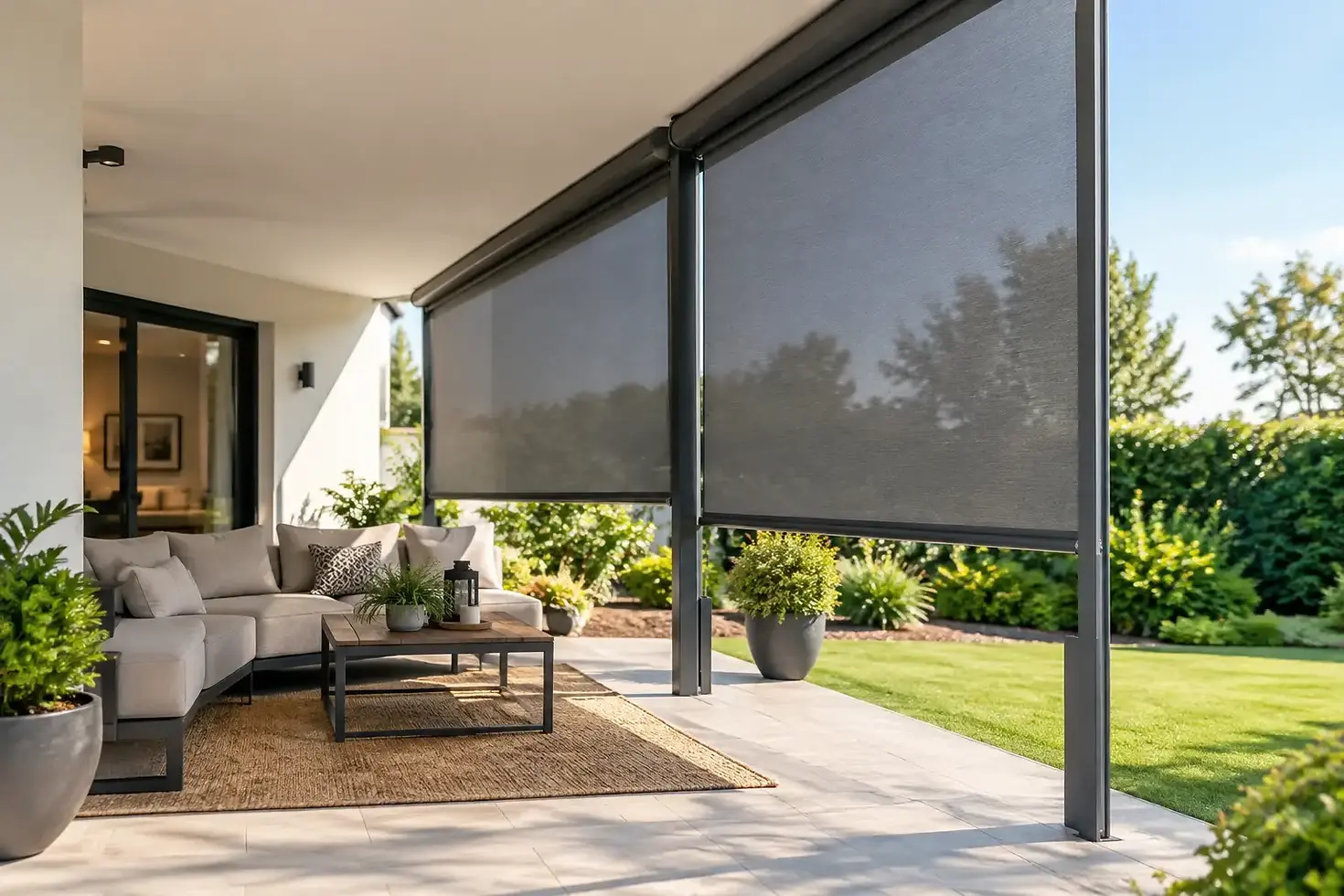
Outdoor blinds are commonly fitted to decks, covered patios, verandahs, pergolas, cafés and balcony openings. Their main job is to manage the elements without closing off the space altogether. On a bright afternoon, a quality screen fabric can reduce direct sun and glare while retaining a degree of outward view. On cooler days, it can make a sheltered area feel noticeably more comfortable by reducing wind movement.
Privacy is another common reason to install them. Homes are often built closer together than they once were, particularly in newer estates and townhouse developments. A well-positioned blind gives you separation from a side boundary or overlooking window without requiring solid walls around the entire outdoor area.
There is a trade-off. Outdoor blinds can improve comfort, but they will not turn an exposed deck into a fully weatherproof room. Wind-driven rain can still find its way into open sides, and a blind should be raised during severe weather unless its system is specifically designed and rated for those conditions. Honest advice starts with what the product can realistically achieve at your home.
Choosing outdoor blinds for the opening
The most useful starting point is not colour or fabric. It is the structure you are fixing to. A blind needs a sound mounting surface above the opening and enough room at each side for guides, brackets or tensioning components. Timber beams, aluminium pergolas, masonry walls and roof overhangs each need a different approach.
Measure the clear width and drop of the opening, but also look beyond those dimensions. Check for downpipes, lights, handrails, uneven paving, sliding doors and posts that sit slightly out of square. These details affect where the blind can sit and whether it will seal or operate neatly. This is why an on-site measure is valuable, particularly for older homes, custom pergolas and angled outdoor areas.
Open-sided patios and pergolas
For a covered patio, the usual aim is flexible shade and wind control. A straight drop blind may be enough where occasional screening is all you need. If you want the edges better contained and the fabric held more securely, a guided system is generally the better fit.
Guided blinds run within side channels or along cables, depending on the design. They tend to look tidier and perform better in breezy locations than a loose bottom rail. They also suit openings where you want to lower the blind partway for sun protection while keeping airflow through the area.
Balconies and exposed locations
Balconies, coastal homes and elevated decks need more careful consideration. Wind exposure matters as much as the size of the blind. A larger blind presents a bigger surface area to gusts, so the fixing method, guide system and recommended operating limits all deserve attention.
In these locations, choosing the cheapest option can become expensive if the system repeatedly strains, rattles or needs repair. A correctly specified product may cost more upfront, but it should be matched to the site rather than asked to do a job it was never designed for.
Outdoor dining and entertaining areas
For entertaining areas, think about how the space changes over a full day. Morning sun may enter from one side, while late-afternoon glare arrives from another. You may need blinds on only one or two faces of a pergola rather than enclosing every opening.
This approach often preserves the open feel of the area and keeps the budget focused where it will make the greatest difference. It also means you are less likely to block a view or restrict natural airflow unnecessarily.
Fabric, colour and visibility
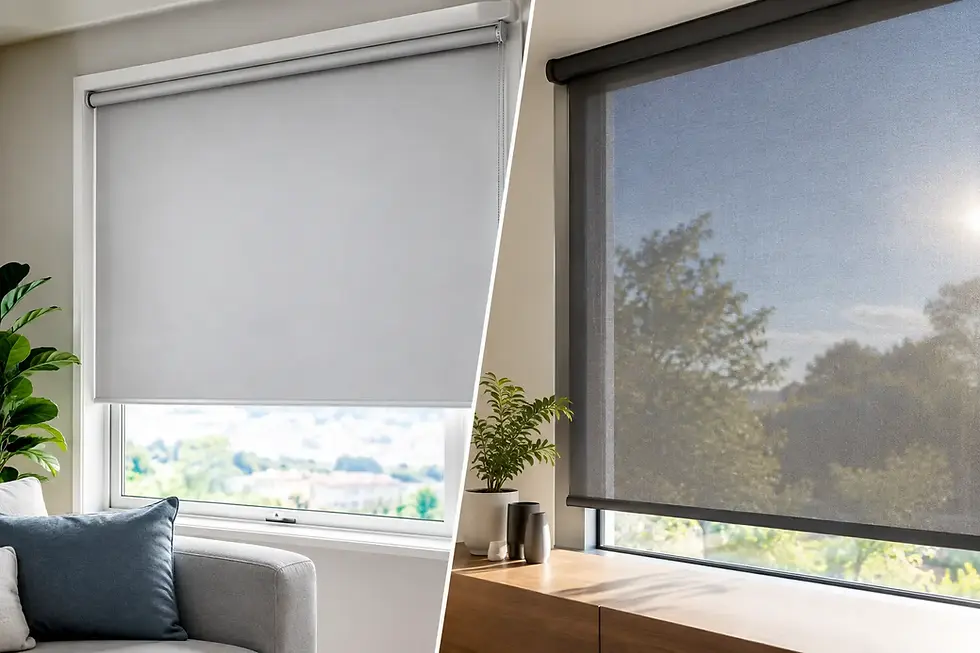
Most outdoor blind fabrics are designed as screen meshes or more solid PVC-style materials. Neither is automatically better. They create very different results.
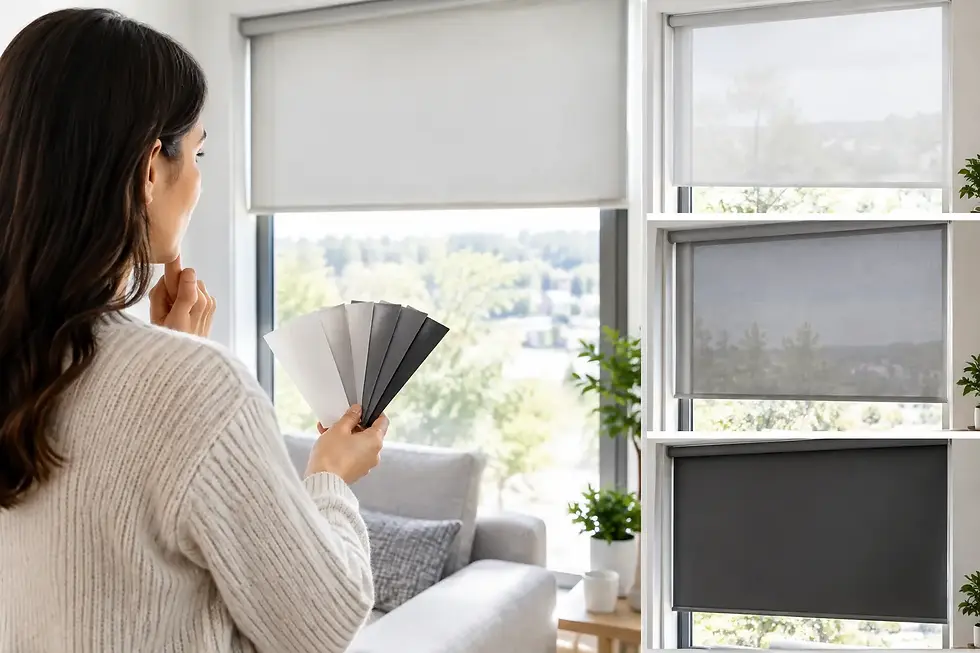
Screen fabrics are popular because they filter sun and provide daytime privacy while allowing some visibility out. The openness of the weave affects how much light, heat and view are retained. A more open weave generally gives a clearer view and better airflow, while a tighter weave offers greater shade and privacy.
Clear PVC can block wind and rain more directly, making it useful for sheltered dining areas and commercial settings. The compromise is that it can feel more enclosed, shows marks more readily and may create more heat build-up in direct sun. It also needs sensible cleaning to avoid scratching the surface.
Colour has a practical role as well as a visual one. Darker screen fabrics can offer a clearer view through the blind in strong daylight, while lighter colours may better complement pale exterior cladding and help soften the visual weight of a large opening. The best choice depends on where you sit, what you look towards and how the blind relates to window frames, roofing and decking.
A mobile showroom or sample consultation makes this decision much easier. Fabric swatches viewed indoors rarely tell the full story. Holding them up at the actual opening shows how the colour works with the exterior light, landscaping and existing finishes.
Manual or motorised operation?
For a small, easily reached opening, manual operation is often straightforward and cost-effective. The key is choosing a control style that is safe, practical and positioned where it can be used comfortably. If you will need a chair or step ladder to reach it, it is unlikely to be used as often as you expect.
Motorised outdoor blinds are particularly useful for wide openings, multiple blinds or areas used regularly for entertaining. They make it easier to respond quickly when the sun shifts or the wind picks up. Depending on the system, control may be through a wall switch, remote or smart-home integration.
Motorisation does add cost and requires planning for power access. It is best considered before construction is finished on a new pergola or renovation, when cables can be concealed and the installation can be planned cleanly. Retrofitting is still possible in many cases, but the wiring route may be more visible.
Installation details that affect performance
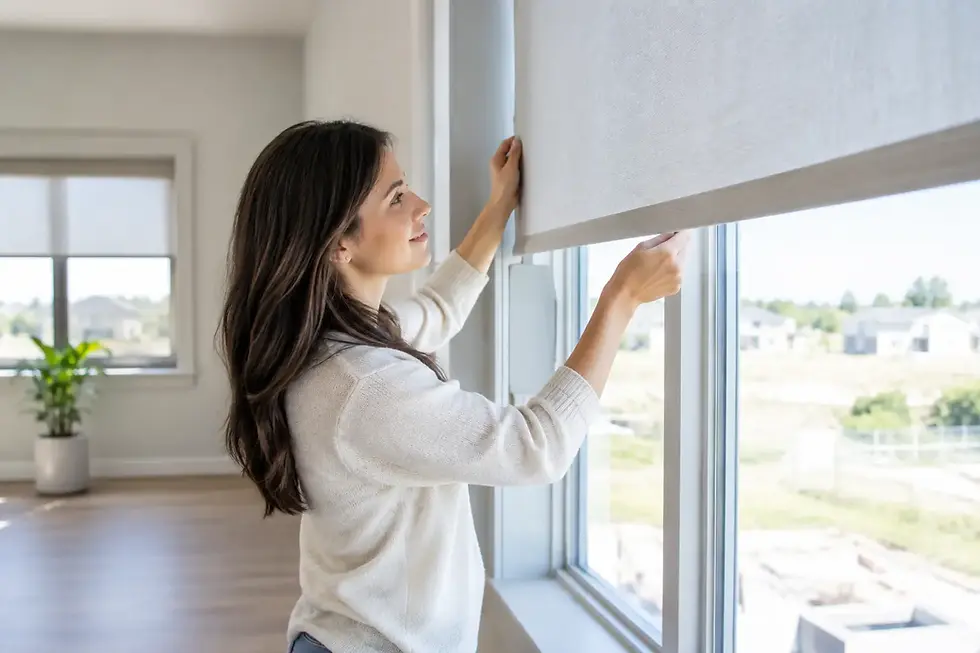
A good-looking blind is only as reliable as its installation. Fixings need to suit the substrate, brackets must be level, and the fabric should track smoothly without excessive tension or sagging. Where blinds meet decking, paving or a balustrade, the bottom edge also needs enough clearance to operate without catching.
Drainage matters around covered outdoor spaces. Water should not pool against guide channels or run directly into mechanical components. If the blind sits near a barbecue, outdoor heater or cooking area, allow suitable clearance and follow the appliance manufacturer’s safety requirements. Heat, smoke and grease can shorten the life of fabrics and mechanisms.
Ask about the care required before you buy. Most outdoor fabrics benefit from a gentle rinse to remove dust, salt and pollen, especially in coastal areas. Avoid harsh cleaners and abrasive brushes unless the manufacturer specifically recommends them. Check tracks and guides periodically for leaves, grit and small stones that can interfere with smooth operation.
When a blind is not the best answer
There are situations where another solution may suit better. Outdoor shutters can provide a more solid architectural finish and may be preferable where security, strong privacy or adjustable louvres are priorities. Fixed screens can suit openings that never need to be fully open. If the main issue is overhead heat, a roof shade or awning may make more difference than a vertical blind.
The right answer can also be a combination. For example, an overhead cover can manage midday heat, while one well-placed exterior blind handles low western sun and privacy. Looking at the entire outdoor area avoids paying for more product than the space needs.
Before committing, arrange a proper measure and talk through how you use the area in summer, winter and windy weather. Bring the samples to the opening, test the likely sightlines and consider the fixing details before placing an order. A well-chosen blind should feel like part of the home, not an afterthought added once the sun becomes unbearable.
Comments