

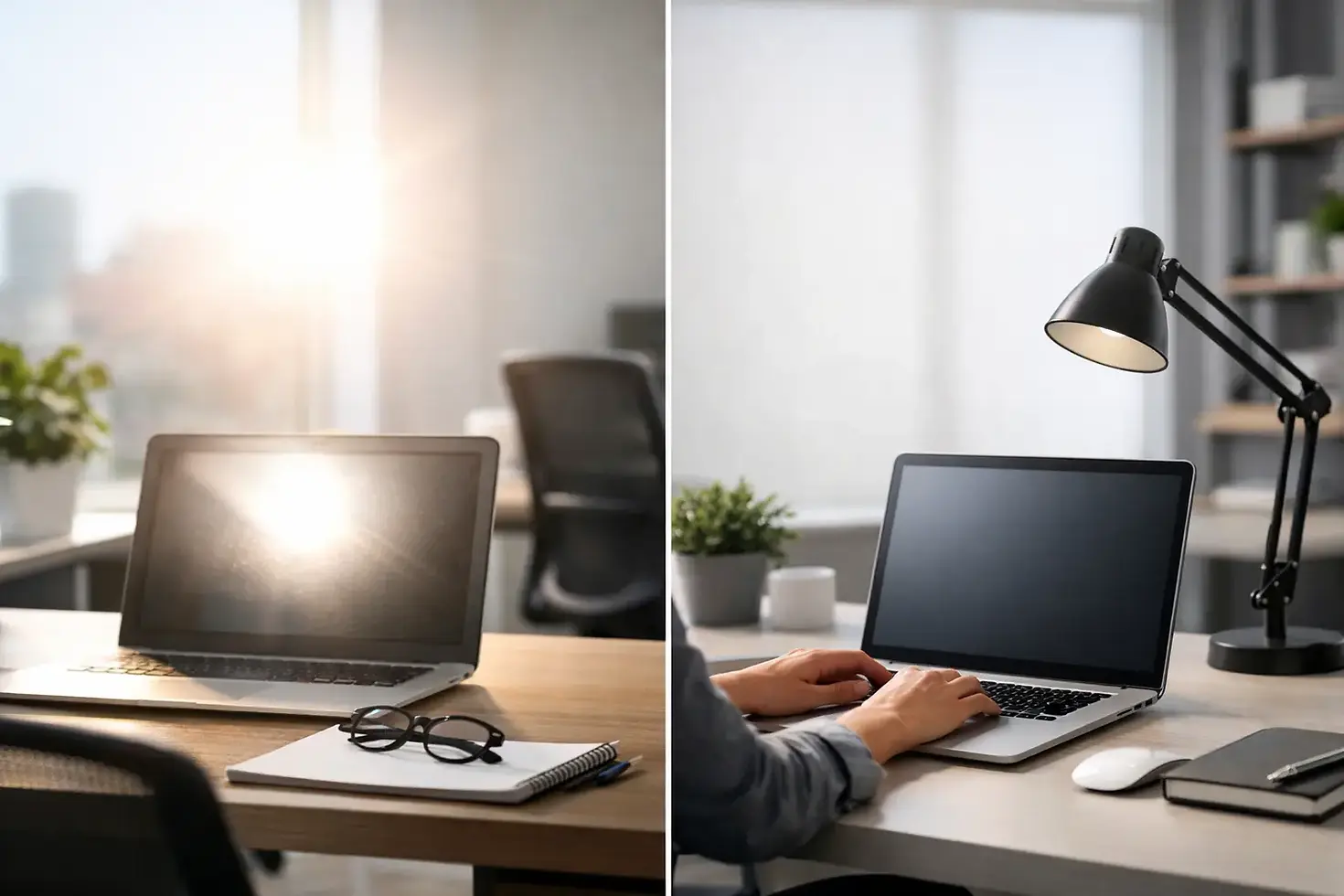
Office Glare Reduction That Works All Day

A bright office can feel like a positive feature until the morning sun lands directly on a monitor, a client cannot see a presentation, or staff start closing one eye to read a spreadsheet. Effective office glare reduction is not about making a workspace dark. It is about controlling harsh light while keeping the room comfortable, professional and pleasant to work in.
The best answer depends on the direction of each window, the height and angle of the sun, how the room is used and whether privacy, heat control or appearance also matter. A south-facing meeting room, for example, has very different needs from a west-facing open-plan office that catches strong afternoon sun.
Why office glare becomes a workplace problem
Glare occurs when there is a large contrast between a bright window and the task in front of someone. A computer screen, whiteboard, glass partition or polished desk can reflect that light straight into a person’s line of sight. Even when the room does not feel excessively hot or bright, that reflection can make focused work tiring.
The usual signs are easy to spot. Screens get tilted or moved, people change desks at certain times of day, blinds are left permanently shut, or a meeting room is avoided when the sun is low. These are practical workarounds, but they can leave a workplace darker than necessary and make a well-designed office feel closed in.
Direct sunlight is only part of the issue. Low-angle sun is particularly disruptive in the early morning and late afternoon, while broad glazed areas can create a constant wash of reflected light throughout the day. Offices with white walls, glossy tables and hard flooring often experience more noticeable bounce and reflection.
Start with the window, not the catalogue
Choosing window furnishings by colour or price alone can lead to a disappointing result. Before selecting a blind or shutter, look closely at what happens at each window over a normal working day.
Consider where monitors, desks and meeting tables sit in relation to the glass. Note whether glare comes from direct sun, reflected light from nearby buildings or vehicles, or a bright sky. Also consider how often the covering needs to move. A boardroom may need full light for general use and quick glare control for video calls, while a reception area may need privacy without losing its connection to the street.
Window direction provides a useful starting point. East-facing windows often need adjustable control early in the day. West-facing glazing usually needs a solution that performs well against afternoon heat and low sun. North-facing windows can deliver generous daylight but may still cause harsh reflections, depending on the layout. South-facing windows are generally more consistent, although screen glare can still occur from bright overcast conditions.
A professional measure is valuable here because small details affect the finish and performance. Window recess depth, mullions, handles, door clearances, ceiling height and the position of furniture all influence what can be fitted and how well it will work.
Blinds that balance daylight and screen comfort
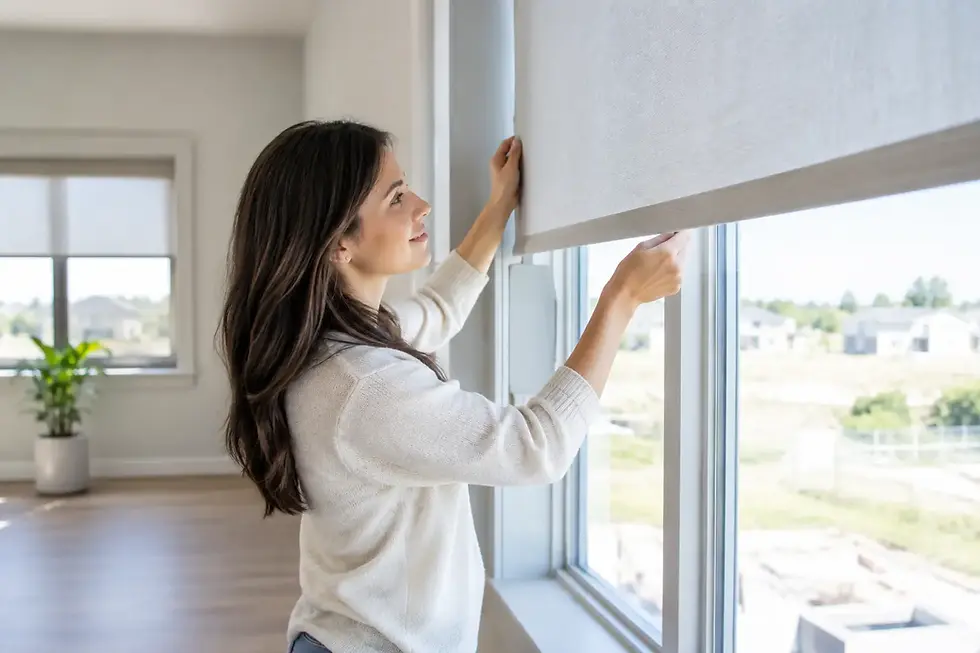
Roller blinds are a popular choice for offices because they are neat, practical and available in fabrics suited to different levels of light control. The fabric choice is the important part.
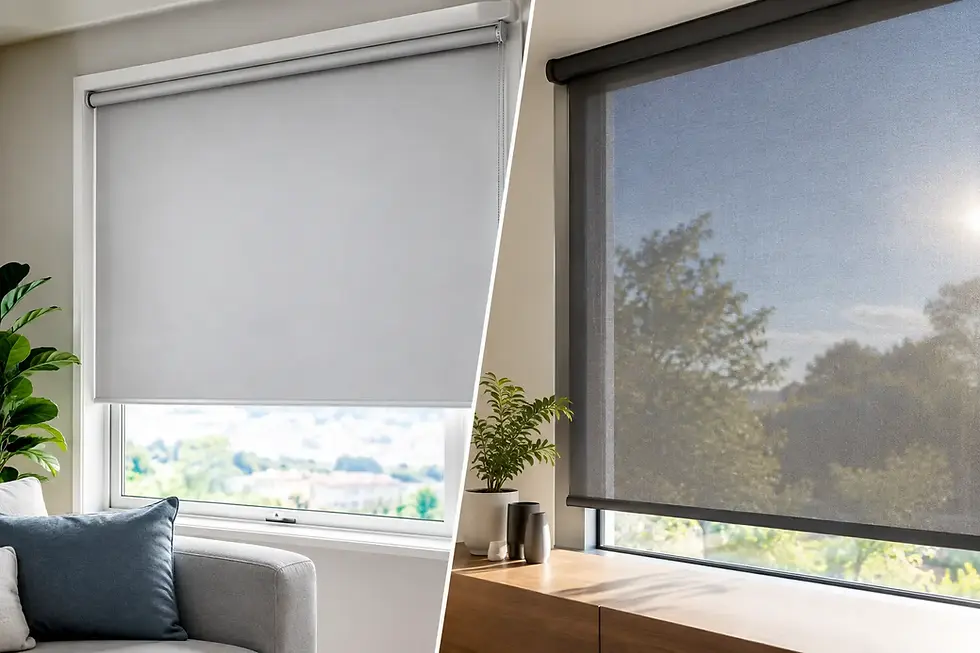
Sunscreen roller blinds
Sunscreen fabrics filter sunlight and reduce glare while preserving an outward view during the day. They are often a strong option for workplaces where staff want natural light without the discomfort of direct sun on screens. The openness of the weave affects both visibility and glare control: a more open fabric maintains more view, while a tighter weave provides stronger shading and privacy.
The trade-off is that sunscreen fabric does not provide complete night-time privacy when interior lights are on. It may also be insufficient where a projector, large digital display or very strong western sun demands near-total blockout.
Blockout roller blinds
Blockout roller blinds provide the greatest control over direct light and are well suited to presentation rooms, training spaces and windows that receive intense sunlight. They can also help reduce heat entering through glass, which is useful where air conditioning is working hard in the afternoon.
Used across every window in an office, however, blockout blinds can make the room feel overly enclosed. They work best when they can be raised when conditions allow, or paired with another layer that handles daytime glare more gently.
Dual roller blind systems
A dual roller blind combines a sunscreen blind with a blockout blind on the same window. During normal work hours, the sunscreen layer softens glare and retains daylight. When privacy, presentations or stronger sun protection are needed, the blockout layer can be lowered.
This configuration costs more than a single blind, but it offers a practical level of flexibility in meeting rooms and offices used for several purposes. It also prevents the common all-or-nothing choice between an unobstructed but glaring window and a fully darkened room.
Venetian blinds
Venetian blinds give users direct control over the angle of incoming light. Tilting the slats can redirect daylight towards the ceiling or floor rather than allowing it to hit a screen, while still maintaining some light and view. This makes them useful for offices where sun angles change throughout the day.
Their moving parts and horizontal surfaces do require regular dusting, particularly in busy commercial settings. They are often best where precise adjustment is more valuable than the clean, minimal look of a roller blind.
When shutters make sense in an office
Interior shutters bring a more architectural finish to professional rooms, client-facing spaces and home offices. Their adjustable louvres allow light to be softened and redirected without covering the whole window. They can also provide privacy and a polished appearance where the window itself is a feature.
Shutters are particularly useful when a room needs year-round versatility. Open the panels and louvres for maximum daylight, tilt the louvres to cut reflections, or close them for privacy. They are not always the most economical choice for a large bank of commercial glazing, and their panel layout needs to suit window access and opening requirements. In the right setting, though, they offer durable control with a tailored look.
For areas exposed to moisture or demanding conditions, material selection matters. A knowledgeable adviser will recommend a shutter material suited to the room rather than treating every window the same.
Installation details that affect glare control
The gap around a blind may seem minor, but it can be the exact place where low sun slips through. Recess fitting, face fitting, bracket placement and the width of the fabric all affect light leakage and the final appearance.
For roller blinds, an appropriately sized overlap beyond the window opening can significantly improve coverage. In a recess, the available depth must be checked so the blind operates cleanly without clashing with handles or frames. For wider office windows, linked or motorised systems may make daily operation much easier than asking staff to adjust several individual blinds.
Motorisation can be worthwhile for hard-to-reach windows, large glazing runs and rooms with a predictable sun pattern. Timed operation can reduce glare before it becomes disruptive, though manual control still suits many smaller offices where needs change throughout the day. The right choice comes down to the room’s use, access and budget.
Avoid the common quick fixes
Tinted film, improvised curtains and permanently closed blinds can appear to solve glare quickly, but each has limitations. Film can reduce light and heat yet offers little flexibility once installed. Curtains may create a soft look but are usually less precise around screens and can gather dust in a work environment.
The biggest mistake is fitting a single solution across every window without considering orientation. A fabric that works beautifully on one side of a building can be frustrating on another. It is also worth avoiding very dark coverings simply because they stop glare. If they remove useful daylight at the same time, the office may rely more heavily on artificial lighting and feel less inviting.
A better way to plan office glare reduction
Walk through the office at the times people are most affected, not just when the space happens to be empty. Take note of reflections on screens, areas that overheat, windows that need privacy and spaces where staff need to retain a view outside. From there, select coverings window by window, while keeping colours, hardware and operation consistent across the fit-out.
Seeing fabric samples and shutter finishes against the actual glass makes this decision far easier. Light changes the appearance of every colour and weave, and a solution that looks right in a showroom may behave differently in a sun-filled meeting room.
A well-fitted window covering should let people get on with their work without thinking about the sun at all. That is the real measure of success: comfortable screens, useful daylight and an office that still feels open when the afternoon light arrives.

Comments