

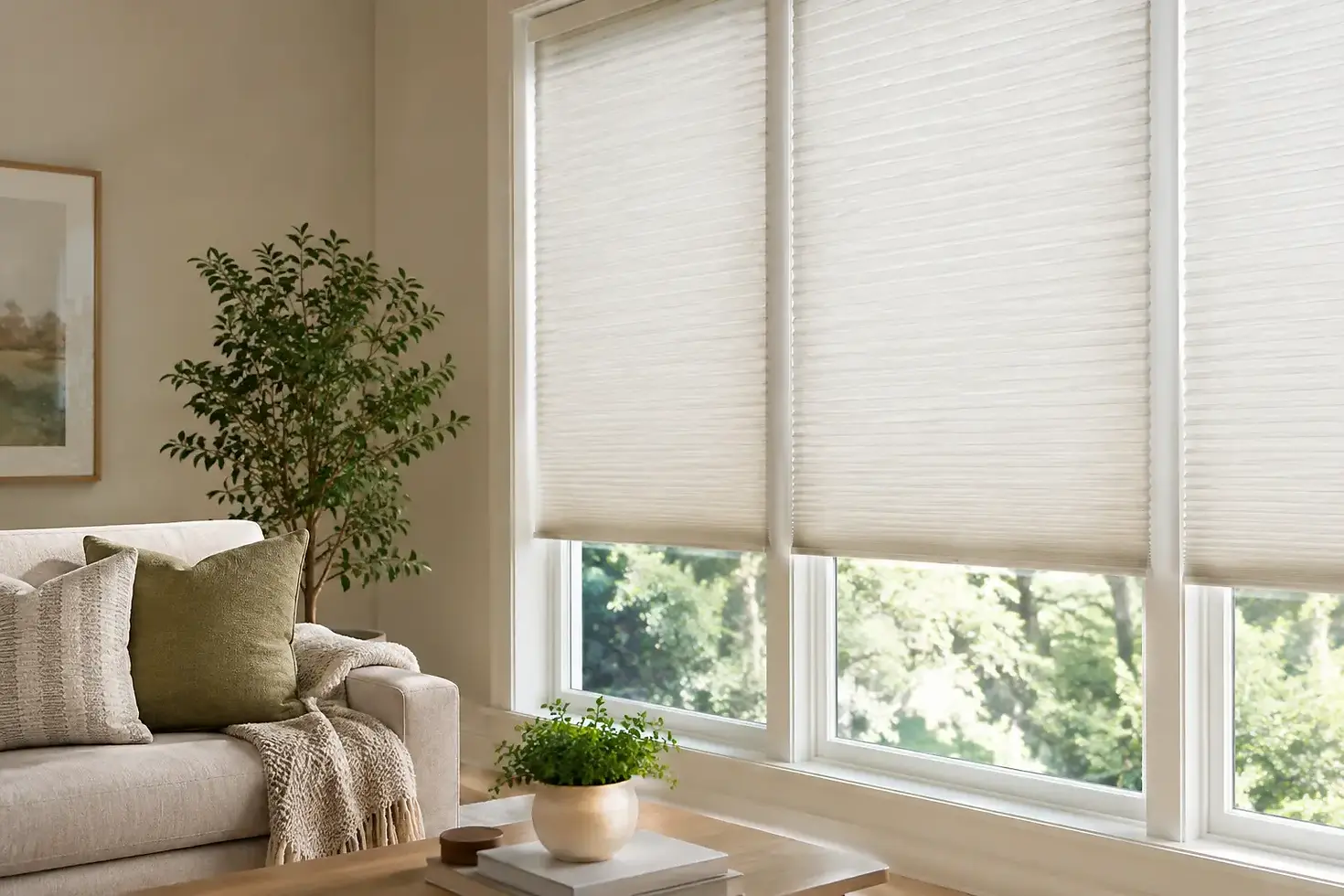
10 Energy Saving Window Treatment Ideas

A west-facing living room can feel comfortable at breakfast and become unbearable by late afternoon. That change is not always a sign that your air conditioner is undersized. Often, the window is letting too much summer heat in, while offering very little protection when the temperature drops overnight. The right energy saving window treatment ideas address both problems, while still giving you the privacy, daylight and finished look you want.
Windows are a compromise point in every home. They connect rooms to light and views, but glass transfers heat far more readily than an insulated wall. A made-to-measure blind or shutter will not replace good glazing, wall insulation or sensible ventilation. It can, however, make a noticeable difference to comfort by creating an insulating layer, reducing direct sun and limiting drafts around the window area.
Start with the window, not the product
The best treatment depends on the room’s orientation, window size, glazing and how you use the space. A beautiful timber-look Venetian may suit a bedroom aesthetically, for example, but a cellular blind can offer stronger insulation where winter warmth is the priority. Likewise, a roller blind may be ideal for cutting glare in a home office, while exterior shading can be the better answer for intense western sun.
Before choosing a fabric or finish, consider when the room is uncomfortable. Is it hot in the afternoon, cold before bed, overly bright on screens, or exposed to neighbours? This gives a clearer brief than simply asking for the warmest blind. It also prevents paying for a product that solves the wrong problem.
Accurate fitting matters just as much. Large side gaps, an awkward recess or a blind that cannot sit close to the glass can reduce the benefit of an otherwise excellent product. Tricky bay windows, doors and unusually shaped openings are worth measuring properly rather than estimating from a rough width and height.
1. Choose cellular blinds for insulation
Cellular blinds, sometimes called honeycomb blinds, are among the most practical options for homes that feel cold in winter or warm near exposed windows. Their fabric cells trap a pocket of air, slowing heat transfer between the glass and the room.
They work particularly well in bedrooms, living areas and renovated homes where replacing windows is not on the immediate budget. A close fit within the reveal generally gives the best result, although the right mounting method depends on the depth of the frame and how the window opens.
Cellular blinds are not always the first choice for rooms where you want a crisp, hard-edged shutter look or maximum visibility through the window. But where thermal comfort is the main concern, their performance-to-profile ratio is hard to overlook.
2. Use blockout roller blinds to manage heat and glare
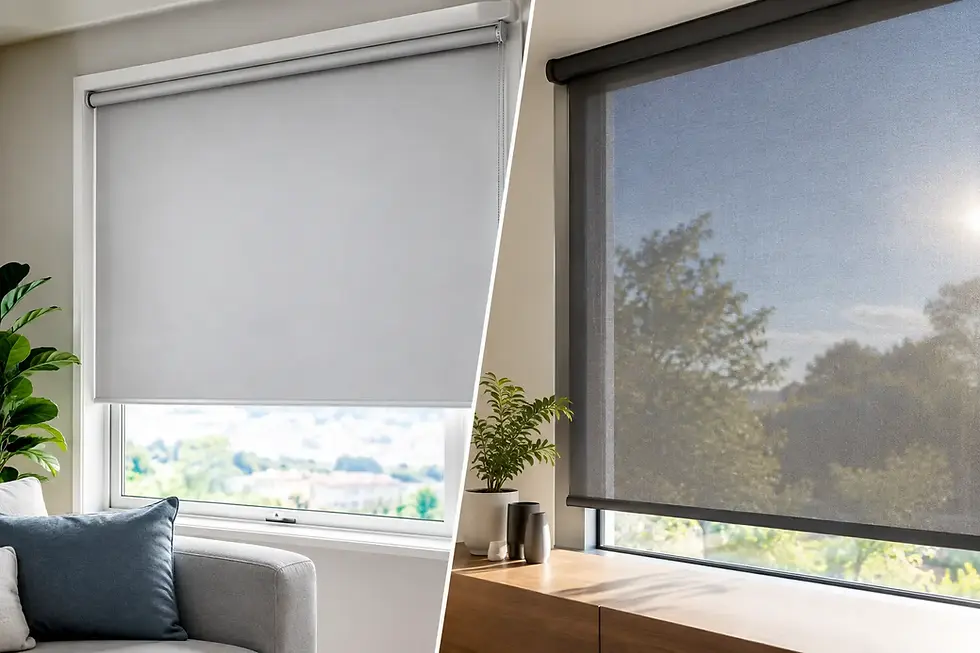
A blockout roller blind gives a window a solid layer of coverage when lowered. It is a practical choice for bedrooms, media rooms and spaces with strong direct sun. In summer, closing it before the sun hits the glass helps prevent the room from heating up in the first place. Once furnishings, flooring and internal surfaces have absorbed heat, it takes longer to cool the room again.
For better day-to-day flexibility, consider a dual blind arrangement. A sunscreen fabric can soften glare and retain an outward view during the day, while a blockout blind provides privacy and stronger thermal protection at night. This approach is especially useful in street-facing bedrooms and living spaces where one fabric needs to do too many jobs.
The trade-off is that roller blinds do not create the same insulated air pockets as cellular designs. Their energy-saving value comes largely from shading, coverage and correct use rather than fabric thickness alone.
3. Add exterior shading where the sun is relentless
Stopping solar heat before it reaches the glass is often more effective than trying to deal with it from inside. Exterior shutters and outdoor blind systems can be a strong option for exposed patios, large sliders and western elevations that cop a long run of afternoon sun.
They can also reduce glare on television and computer screens, protect outdoor areas from wind and provide another level of privacy. In cooler months, opening them during sunny periods lets natural warmth enter, then closing internal coverings after sunset helps hold that warmth in.
Exterior systems need careful consideration around wind exposure, mounting surfaces and access. They are not a one-size-fits-all addition, particularly on upper levels or highly exposed sites. A site assessment helps establish whether the product and fixing method are suitable.
4. Fit shutters for adjustable year-round control
Interior shutters give you more than a simple open-or-closed setting. Tilting the louvres can redirect daylight, reduce glare and maintain privacy without making the room feel shut in. Closing the panels at night adds another barrier between the room and the window.
Shutters suit bedrooms, bathrooms, living areas and character homes where a more architectural finish is wanted. They are also useful on odd-shaped windows and bay windows when designed around the individual openings rather than treated as one large blind.
Their insulation performance varies with the material, louvre design and fit. Shutters are a considered, long-term furnishing choice, but they are usually a higher upfront investment than a straightforward roller blind. For many homeowners, the durability, clean lines and adjustable light control make that trade-off worthwhile.
5. Use Venetian blinds for controlled daylight
Venetian blinds are a sensible choice when light control is the priority. By angling the slats, you can reduce harsh direct sunlight while still bringing daylight into the room. This can lower reliance on artificial lighting and make workspaces more comfortable through the middle of the day.
They are particularly useful in kitchens, studies and rooms where you want to adjust light frequently. However, because slats have small gaps, Venetians are generally not the strongest option for insulation or full blockout. Think of them as a daylight-management solution first, with energy benefits that come from reducing direct sun.
6. Treat doors and large glass areas differently
Large sliding doors and full-height glazing can account for a lot of heat gain and loss. They also need a treatment that will be used consistently. If a covering is awkward to move every time someone goes outside, it may spend more time open than closed.
A roller blind system, carefully configured shutters or an exterior solution can work well, depending on the opening and access needed. The key is to allow the door to operate easily while covering as much glass as possible when the treatment is down or closed. Wider windows may need multiple blinds or panels so you can adjust only the section affected by the sun.
7. Layer window treatments when one product is not enough
Layering is one of the most useful energy saving window treatment ideas for rooms with competing needs. A sheer or sunscreen blind can handle daytime glare, while a blockout blind or curtains manage privacy and overnight warmth. An exterior blind paired with an internal insulating blind can be effective on highly exposed windows.
The best combination is not necessarily the thickest one. It should be easy to operate and suit how your household actually lives. A treatment that stays open because it is cumbersome will offer little benefit, no matter how well it performs on paper.
8. Close coverings at the right time
How you use a window covering affects its performance. In summer, lower blinds or close shutters before direct sun reaches the glass, particularly on west- and north-west-facing windows. In winter, open coverings on sunny days to let in useful solar warmth, then close them before evening temperatures fall.
This is a small habit, but it can reduce the need to run heating and cooling harder. It also helps protect furnishings from fading, especially near large windows with strong afternoon light.
9. Do not overlook gaps, recesses and frame details
A blind mounted well above or well beyond the window may still provide shading, but it can leave more air movement around the sides. Where possible, a close-fitting treatment reduces those paths for warm or cool air to move around the covering.
There are exceptions. Some windows have shallow reveals, protruding handles, security screens or opening directions that limit what can be fitted inside the recess. That is where practical product advice matters. The goal is not to force one style onto every window, but to find the best configuration for that particular opening.
10. Make comfort part of your renovation plan
Window furnishings are often left until the end of a renovation, after paint, flooring and furniture have been selected. Bringing them into the planning stage gives you more control over privacy, light and temperature from day one. It is also easier to coordinate mounting points, electrical clearances and exterior shading before final finishes are in place.
For a new build or a home with challenging glazing, take photos of each room at different times of day and note where the sun lands. Combine that with accurate measurements and a clear budget. A no-obligation in-home measure can help turn those observations into options that fit the window, the room and the way you live.
The most effective choice is rarely the same throughout the whole house. A cellular blind may earn its place in a cold bedroom, a sunscreen roller blind in a bright office and shutters in a privacy-sensitive living room. When each window is treated according to its role, comfort becomes something you notice less because your home simply feels right.


Comments