

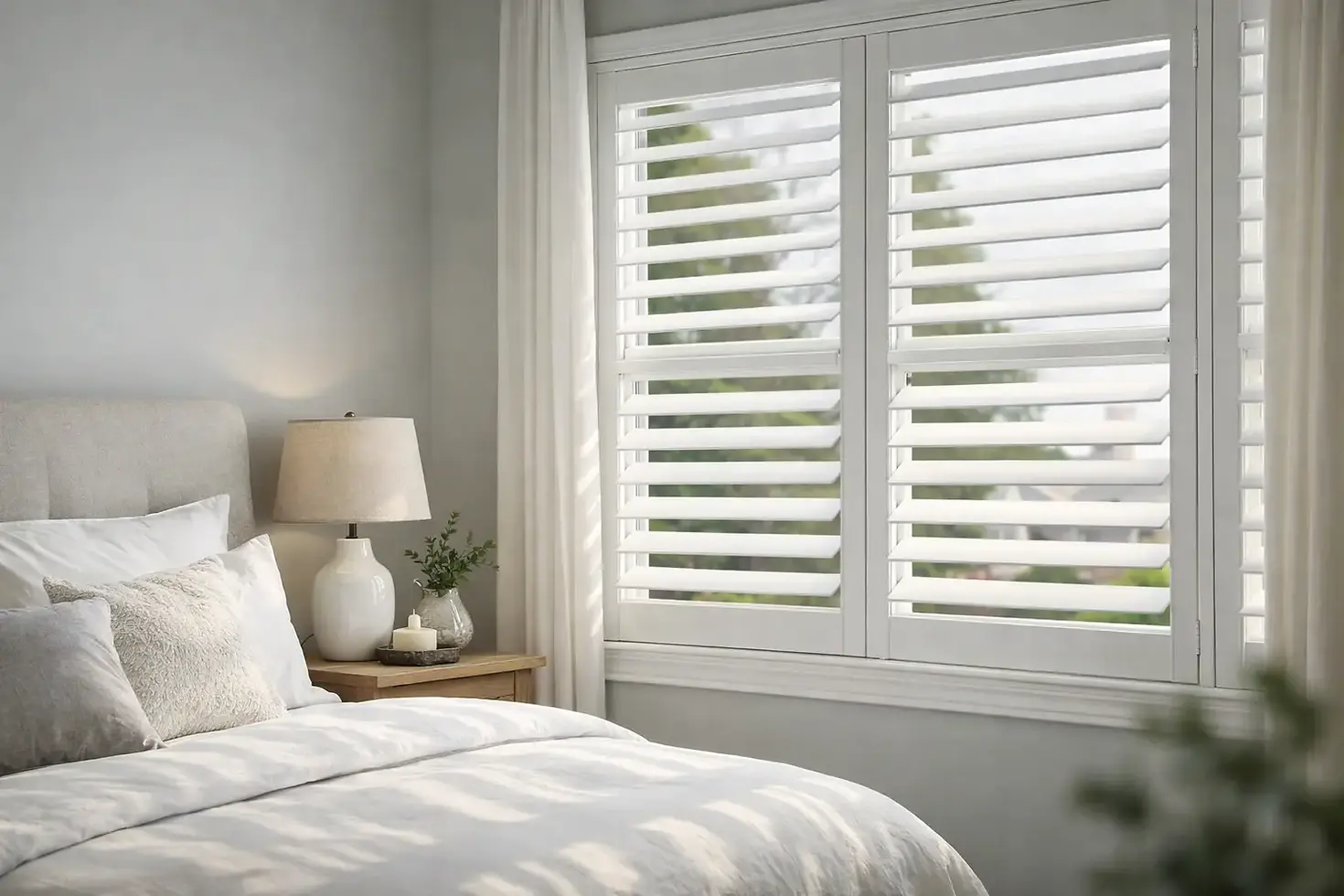
Best Shutters for Bedrooms: What Works?
- Dave Pitout

- Aug 13
- 5 min read
A bedroom can look finished during the day and still feel wrong at night if the window covering does not give you enough privacy, darkness or warmth. The best shutters for bedrooms are not simply the ones that look good in a showroom. They need to suit the way you sleep, the direction the window faces, the size and shape of the opening, and how much insulation you need through a New Zealand winter.
Shutters are a popular choice because they bring structure and a tailored look to a room while giving you more control than curtains alone. With adjustable louvres, you can let daylight in without opening the room to the street or neighbouring homes. The right configuration also makes everyday use simple, rather than leaving you struggling to reach awkward panels or deciding between light and privacy.
What makes shutters right for a bedroom?
For most bedrooms, privacy is the starting point. Street-facing rooms, bedrooms close to a boundary, and homes in growing neighbourhoods often need a covering that can block direct sightlines without making the room feel shut away all day. Shutters do this well because the louvres can be tilted to direct the view upwards or downwards while still allowing natural light to filter through.
Light control is the next consideration. Shutters reduce daylight effectively when closed, but they are not always a complete blackout solution. Small gaps around louvres and panels can allow a little light into the room, particularly around sunrise. For shift workers, light sleepers, nurseries or anyone who prefers a genuinely dark room, shutters may work best alongside a blockout blind or lined curtain.
Warmth matters too. A well-fitted shutter creates another layer at the window, helping to reduce the cold feeling that can come from glass on winter mornings. It is not a substitute for double glazing or good insulation, but it can make a noticeable difference to comfort in a bedroom.
Best shutters for bedrooms: start with the material
The material should suit both the room and the home. Interior shutters are often chosen in timber, composite or PVC-style materials, with each having a place depending on the finish you want, the budget and the conditions around the window.
Timber shutters for warmth and character
Timber shutters offer natural grain, depth and a classic finish that works especially well in character homes, renovated villas and bedrooms where the joinery and furniture have warm tones. They can make a plain window feel like a considered part of the room rather than something to cover up.
Timber is worth considering when appearance is the priority, but it needs the right environment. Bedrooms are generally dry spaces, so they are often well suited to timber. If the bedroom has poor ventilation, regular condensation or is connected to a damp ensuite, discuss the conditions before choosing a material.
Composite or PVC shutters for a clean, practical finish
Composite and PVC-style shutters tend to suit contemporary homes and bedrooms where a crisp painted look is preferred. They are generally a practical option for rooms that experience more moisture or temperature change, and they can be easier to maintain than a natural timber finish.
White remains the most requested colour because it works with most walls, trims and bedding, but off-white and soft neutral tones can be kinder in rooms with warmer paint colours. The best choice is the one that sits comfortably with your window frames and skirting boards. A bright white shutter against cream joinery can look more obvious than expected.
Choose a panel layout that suits the window
The shutter layout has as much impact on day-to-day use as the material. A large bedroom window may look better with several narrow panels than two oversized ones, particularly if you want easy access to the window. Smaller panels are lighter to operate and can be folded back more neatly, though more panels also mean more visible joins.
Hinged shutters are a strong all-round choice for standard bedroom windows. They open like cupboard doors, giving you clear access for cleaning glass, opening windows and enjoying an unobstructed view when you want it. They are particularly useful where a window opens inwards or where access to a latch is needed.
For tall windows or French doors in a bedroom, a split tilt arrangement can be useful. This allows the lower louvres to remain closed for privacy while the upper louvres are opened to bring in daylight. It is a simple feature, but it can make a room feel far less enclosed during the day.
Bay windows need more planning. Each section must be measured accurately so the panels open without catching, while the angles need to look balanced from inside the room. This is one situation where an in-home measure is valuable. A bay can appear straightforward until handles, deep sills, uneven walls or angled frames come into play.
Louvre size changes the look and the light
Louvre size is often chosen on appearance alone, but it also affects how the shutter performs. Wider louvres create a more open, contemporary look and can provide a clearer view through the window when tilted open. They suit larger bedroom windows and rooms with generous proportions.
Narrower louvres can feel more traditional and may be better proportioned on small windows. They create more horizontal lines across the opening, which some homeowners prefer in cottage-style or character homes. Neither option is automatically better. It depends on the scale of the window, the style of the home and how much uninterrupted outlook you want.
When comparing samples, hold them up at the window rather than judging them under showroom lighting. The louvre spacing, colour and finish can look quite different once daylight is coming through them.
Be realistic about darkness and insulation
If your main goal is sleeping in a darker room, ask early whether shutters alone will meet that need. They provide excellent privacy and strong light reduction, but the construction that makes them adjustable also means they are not usually blackout by nature.
A combination can be the better answer. Shutters paired with a discreet blockout roller blind give you the polished, architectural look of shutters during the day and deeper darkness at night. Cellular blinds are another option worth considering where thermal performance is the priority, as their honeycomb structure can help reduce heat loss through the glass.
This does not mean every bedroom needs two window coverings. A room with little early sun may be perfectly comfortable with shutters alone. A west-facing bedroom that heats up in the afternoon, or a child’s room under a bright streetlight, may benefit from a layered approach.
Details that are easy to miss before installation
Before ordering, think about the parts of the window you use most. Can the shutter panels open clear of the handle? Is there enough depth in the reveal for the shutter frame? Will bedside tables, headboards or built-in cabinetry interfere with panels opening? These details determine whether the finished shutter feels effortless or inconvenient.
Also consider how the shutters will be cleaned. Bedroom shutters are relatively low maintenance, but louvres still collect dust. A regular wipe with a soft cloth or duster is usually enough. Choosing a layout that gives you sensible access to both sides of the window will make the job easier over time.
Professional measuring is especially worthwhile for older homes, where walls and window openings are not always square. Made-to-measure shutters can accommodate these variations far better than an off-the-shelf option, but only when the original measure allows for them.
See the options in your own room
The best way to decide is to look at materials, colours and louvre sizes against your actual walls, flooring and window frames. Light & Shade Solutions can bring the showroom to your home for a free, no-obligation measure and quote across Greater Auckland, helping you compare the options with practical fitting advice rather than guesswork.
A bedroom should feel private, restful and easy to live with. Taking the time to match the shutter material, panel design and light-control needs to the room will give you a result that still feels right long after the renovation is complete.


Comments