

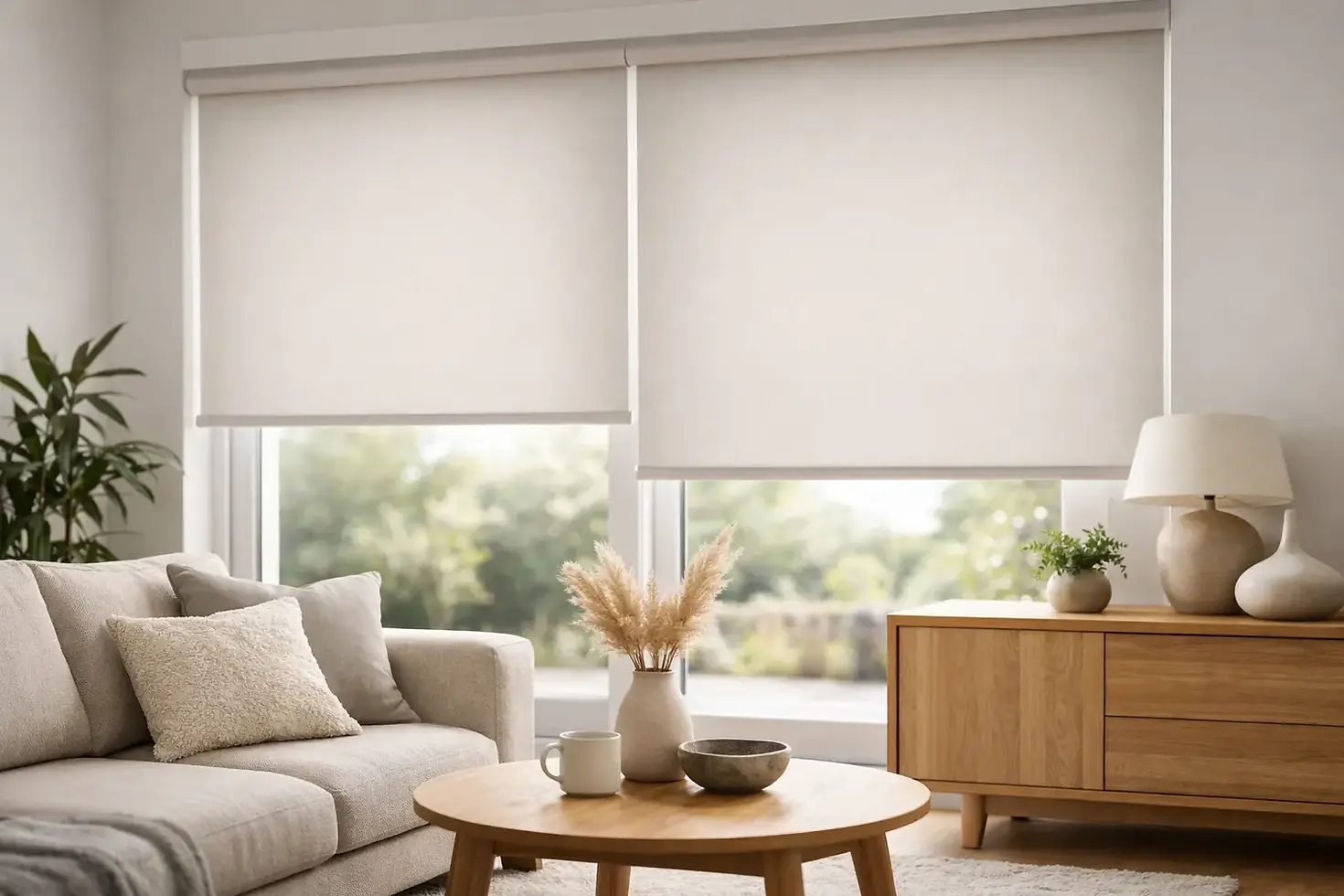
Soluna Roller Blinds for Calm, Practical Rooms
- Dave Pitout

- 5 days ago
- 6 min read
A blind can look perfect in a sample book and still feel wrong once the afternoon sun hits the lounge, neighbours can see in, or the window handle catches the fabric. Soluna roller blinds are designed to give rooms a clean, understated finish while making daily light and privacy control simple. The result, however, comes down to choosing the right fabric, fit and operating system for the way you actually use the space.
What Soluna roller blinds can change in a room
Roller blinds sit close to the window and roll neatly away when raised, so they suit homeowners who want the window covering to feel tidy rather than dominant. Their simple profile works equally well in contemporary new builds, renovated villas and commercial spaces where a consistent finish matters.
The biggest benefit is control. A well-selected roller blind can soften glare on screens, protect furnishings from harsh sun, improve daytime privacy and make a bedroom feel more settled at night. But a roller blind is not one single solution. The fabric determines whether you maintain a view out, filter daylight or block it more substantially.
This is why it pays to consider the room before falling in love with a colour. A bright north or west-facing living area has different needs from a nursery, a street-facing bedroom or a bathroom with frosted glass. The same blind style can work throughout the house, but the fabric specification may need to change from room to room.
Start with light, privacy and the view
For living rooms, kitchens and home offices, many homeowners prefer a sunscreen or light-filtering fabric. These fabrics take the hard edge off strong daylight while keeping the room connected to the outdoors. They can be particularly useful where sunlight creates glare on a television or computer screen, without turning the room into a dark space.
The trade-off is night-time privacy. When the lights are on indoors, a sunscreen fabric generally will not provide the same privacy as a blockout fabric. If your windows face a close neighbour, a footpath or the street, this distinction matters more than the colour of the blind.
Blockout fabrics are usually the practical choice for bedrooms, media rooms and spaces where privacy is the first priority. They reduce incoming light far more effectively, although no standard roller blind can promise complete darkness around every edge. Light can still pass at the sides, above the blind or beneath it, especially where windows are uneven or the blind needs clearance for handles.
A double roller arrangement is worth considering where one room needs both functions. This combines a sunscreen blind for the day with a blockout blind for the evening. It is a popular option in bedrooms and front living rooms because it avoids choosing between a pleasant daytime view and proper privacy after dark.
Openness is more than a technical detail
Sunscreen fabrics come in different openness levels. In simple terms, a more open weave usually lets in more light and gives a clearer view out, while a tighter weave offers greater daytime privacy and glare control. Neither is automatically better.
A room with a beautiful garden outlook may benefit from a more open fabric. A busy road-facing window may call for a tighter option. Looking at fabric samples against your own glass, at the time of day you use the room, is far more reliable than judging them under showroom lighting.
Getting the fit right matters as much as the fabric
A roller blind can be fitted inside the window recess or face fitted over the opening. Both can look excellent, but they solve different problems.
A recess fit keeps the blind contained within the frame and often gives a streamlined, built-in appearance. It works best where the recess is deep enough, square enough and free of obstructions. Window winders, latches, security screens and handles all need to be checked before this option is confirmed.
A face fit is installed above or around the opening. It can provide better coverage and is often the safer choice when the recess is shallow, the window is out of square or stronger light control is needed. For blockout applications, taking the blind beyond the sides of the glass can noticeably reduce light gaps.
This is also where professional measuring earns its keep. Older homes can have window frames that vary by several millimetres from one side to the other. Bay windows, sliding doors and corner glazing add further decisions around bracket positions, overlaps and clearances. A made-to-measure blind should be planned around these details, not forced to fit after it arrives.
Choose a colour that works beyond the sample
Neutral whites, warm greys, soft linens and charcoal tones remain popular because roller blinds cover a large visual area without adding bulk. Yet the best colour is not always the one that looks nicest as a small swatch.
Hold samples near the window and view them against your wall colour, flooring and existing joinery. Natural light can make a cool grey feel blue, while a creamy white may look noticeably warmer beside crisp white trim. Consider what the fabric will look like both when the blind is down and when it is rolled up at the top of the window.
Darker sunscreen fabrics can sometimes give a stronger view through the fabric during the day because they reduce reflected light. Lighter fabrics may create a softer, brighter feel within the room. There is no universal rule here - the orientation of the window, surrounding buildings and your preferred interior style all play a part.
Manual or motorised operation?
A chain-operated roller blind is a dependable, cost-conscious choice for many standard windows. It gives accurate positioning and is straightforward to use. For households with young children, chains must be fitted with the appropriate safety device and kept properly tensioned and out of reach.
Motorised operation can be a sensible upgrade for large, high or hard-to-reach windows. It is also useful when several blinds are operated every day, such as across a bank of sliding doors or in a living space with high glazing. The convenience is real, but it should be weighed against the additional cost and the practical requirements of power, charging or battery access.
For some homes, motorisation is about more than convenience. Raising blinds during hot afternoon sun or lowering them for privacy at dusk can become part of a regular routine. For others, a simple chain system remains the best-value answer. The right choice is the one you will use comfortably for years, not simply the most advanced option available.
Consider warmth, glare and the seasons
Window coverings can support a more comfortable home, particularly on large areas of glass. Roller blinds help manage direct sun and can add a layer between the room and the window, but their thermal performance depends on the fabric, fit and the window itself. They should not be treated as a replacement for good glazing or insulation.
In a sunny room, the priority may be reducing heat and glare in summer. In a cooler bedroom, the focus may be creating a more enclosed feel at night. A blockout fabric and a well-covered face fit can help, while a double roller solution gives greater flexibility across changing seasons.
For bathrooms, laundries and kitchens, choose a fabric suited to the conditions and keep it clear of persistent splashes. Ventilation still matters. No window furnishing performs well if moisture is left to build up around it day after day.
Why an in-home measure makes selection easier
Choosing blinds online can be convenient, especially when you already know the product and your measurements are straightforward. Yet many of the costly mistakes happen before the order is placed: measuring a recess incorrectly, overlooking a window winder, selecting a fabric that does not provide enough privacy, or assuming every window in a room should be treated identically.
An in-home consultation lets you assess Soluna roller blind fabrics in the actual light of your home and discuss how each window is used. At Light & Shade Solutions, the focus is on checking the practical details first, then helping you narrow the options without pressure. This approach is especially helpful for new builds, older homes and windows that are anything but standard.
A good installation should feel uncomplicated once it is finished. The blind should run smoothly, sit squarely, clear the hardware and look intentional from inside and out.
The most satisfying choice is rarely the boldest one. It is the blind that handles the glare when you are working, gives you privacy when evening arrives, and quietly suits the room every other hour of the day.


Comments